Travel trailers take a beating. Sun, rain, vibration, and thousands of road miles wear down seals, connections, and moving parts until something fails-often at the worst possible time. The good news is that most travel trailer repairs are predictable, well-documented, and increasingly available right where your trailer sits, thanks to mobile rv repair services staffed by certified technicians who arrive with the tools and parts to get you back on the road.
This guide walks through how mobile RV service works, the most common fixes, realistic costs, and a clear framework for deciding when to grab your own wrench versus picking up the phone.
Key Takeaways
- Mobile rv repair brings RVTAA-certified and rvia master certified technicians directly to your campsite, storage lot, or driveway, eliminating the inconvenience of towing your trailer to a distant shop and waiting weeks for an opening.
- The most frequent travel trailer repairs fall into a handful of categories-roof leaks, water heaters, electrical faults, plumbing issues, and slide-outs-and addressing them fast prevents water intrusion from escalating into expensive structural damage like rotted framing or subfloor replacement.
- DIY is reasonable for lower-risk tasks (swapping fuses, replacing batteries, tightening cabinet hardware, minor caulk touch-ups), but call a certified tech any time you’re dealing with propane systems, brakes, high-amperage 120V wiring, or soft spots in the roof or floor.
- RVIA master certified and RVTAA-certified techs follow manufacturer standards, use OEM-approved sealants and torque specs, and can document repairs in a way that satisfies warranty providers and insurance companies on qualifying claims.
How Mobile RV Repair Works for Travel Trailers
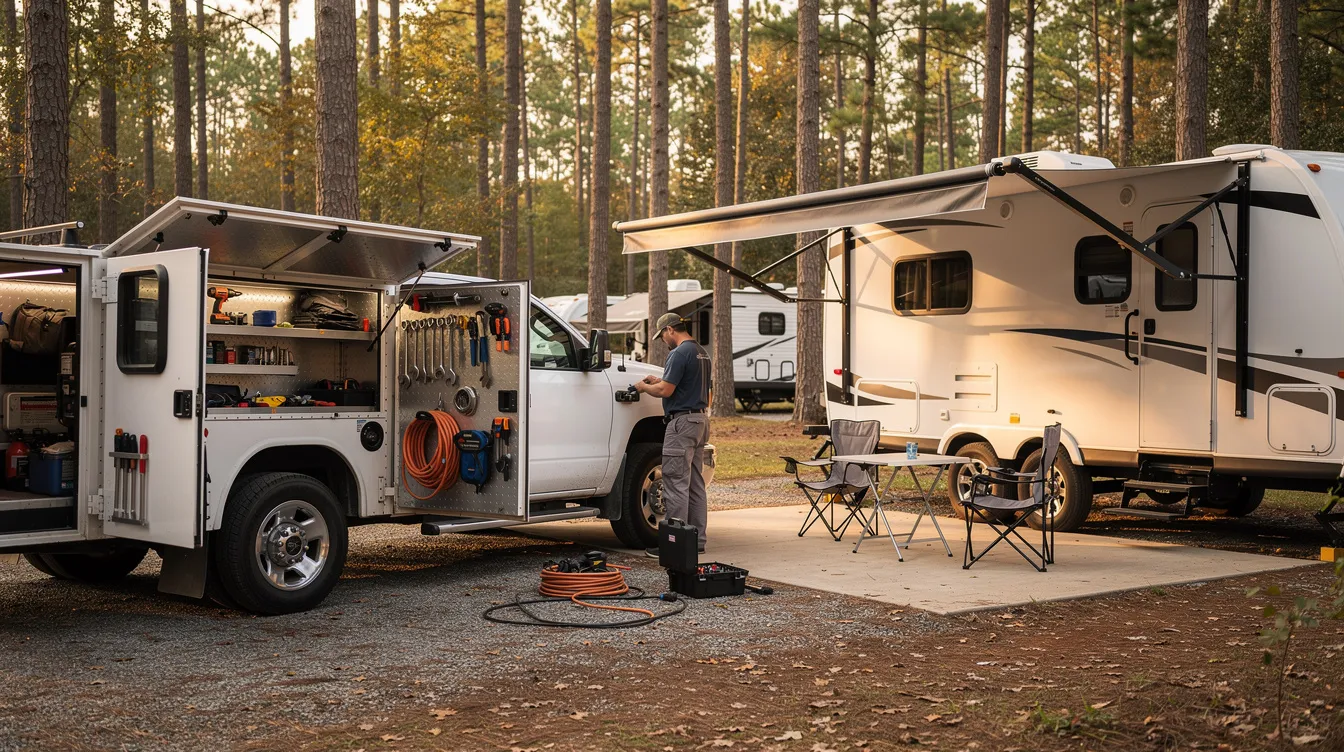
Mobile rv repair means a technician drives a fully stocked service truck to your location-your driveway, a KOA campground in Arizona, a storage lot on the edge of town-instead of you arranging towing to a brick-and-mortar shop, and services like RV Repair Hero’s mobile RV technicians in Tucson, AZ specialize in bringing full repair capability directly to you. Mobile RV repair technicians are RVTAA-certified, and many mobile RV services can cover up to 100 miles from their base. Emergency mobile RV repairs can be requested at any location, whether you’re parked roadside or settled into a seasonal site.
What the Booking Process Looks Like
Booking typically starts with an initial call or online form where you describe the symptoms-for example, “Suburban SW6D water heater won’t ignite” or “ceiling dripping near the front A/C unit.” Many providers ask for photo uploads or a short video call for pre-diagnosis. You’ll receive an estimate, then confirm a time window for the appointment.
When booking through a provider’s website, you may encounter a page performing security verification-a quick CAPTCHA step where the security service verifies you aren’t one of the malicious bots that crawl scheduling forms. If you see a respond ray id or a “verification successful” message displayed on screen, that’s normal and means the bot protection is working.
What a Mobile Tech Brings
A typical service truck carries diagnostic tools (multimeters, combustion analyzers, leak detectors), common 12V and 120V parts, fittings, sealants, water heater igniters, furnace control boards, roof patch kits, and basic plumbing supplies. Mobile RV repair includes services for electrical and plumbing systems, and techs can handle appliance repairs like refrigerators and AC units on site.
Mobile Service vs. Traditional RV Shops
The biggest advantage is eliminating the waiting. No lining up behind dozens of other rigs at rv dealers or independent shops. No arranging a tow vehicle. No lost campground nights. This matters even more if you’re living in the trailer full-time or traveling through areas where the nearest RV repair shop is hours away. While this article focuses on travel trailers, many mobile rv techs also service motorhomes, fifth wheels, and other RV types across the U.S. and Canada, and regional providers such as mobile RV repair in Tucson, AZ are set up to support a wide range of rigs in specific markets.
That said, some jobs still require a physical shop. Frame straightening, full roof membrane replacement, major collision work, and certain warranty-only dealer repairs need lifts, indoor climate-controlled space, or specific manufacturer authorization. A reputable mobile tech will tell you honestly when a fix exceeds what can be done at your site.
Most Common Travel Trailer Repairs (And How Pros Fix Them)
Regular use, sun exposure, constant vibration on the road, and seasonal storage conditions cause predictable failures in travel trailer systems. Common travel trailer repairs include roof leaks, plumbing issues, and electrical faults. Understanding what breaks-and how a professional fixes it-helps you catch problems early and communicate clearly when you contact a service provider.
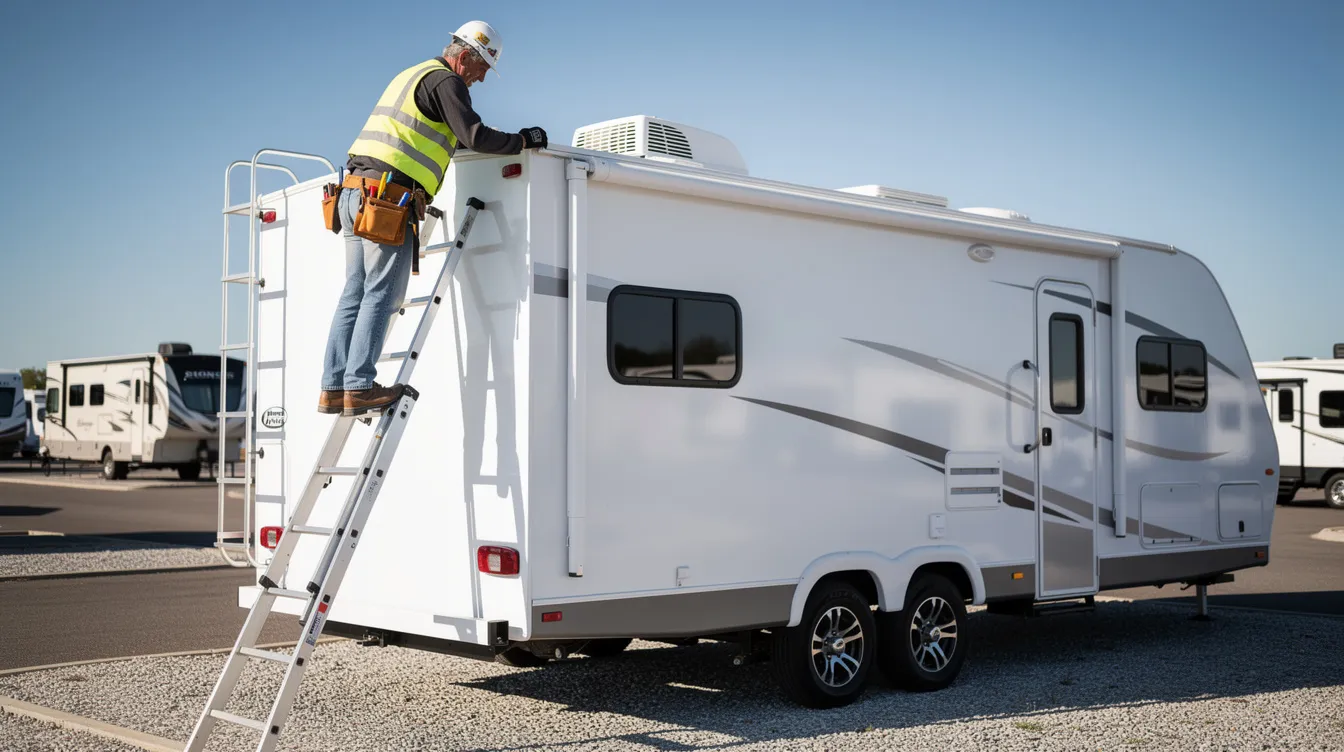
Roof & Leak Repairs – Roof leaks are often caused by cracks in sealant around vents, AC units, and edges. Common repairs include leaky roofs and windows, and door and window seals are prone to failure, which may lead to water intrusion. Sealants should be regularly inspected to prevent water damage in travel trailers. According to an ANSI complaint study, roof systems accounted for 28.3% of all reported travel trailer complaints, with rain leaks making up over half. Techs inspect EPDM and TPO membranes, reseal seams and roof vents, repair soft spots in the decking, and stop corner-cap or window leaks before moisture reaches wall framing. A single vent reseal may run $300–$700, while a full roof replacement can cost $4,000–$6,500. Roof inspections should occur annually and require maintenance every 3-4 years.
Water Heaters & Plumbing – Atwood and Suburban water heaters are the two dominant brands in travel trailers, and each has characteristic failure modes. Ignition failures account for roughly 35% of reported Atwood issues, often traced to faulty electronic boards or dirty burner assemblies. The anode rod in a Suburban water heater protects the tank from rusting and should be inspected regularly-replace it when it’s about 75% consumed, which in hard-water areas can mean every one to two years. Water heaters may require replacement of the anode rod if hot water smells sulfuric or the tank shows corrosion. Beyond water heaters, plumbing leaks in RVs often occur from loose fittings under sinks or behind showers. Trailer movement can cause plastic plumbing fittings to vibrate loose and leak over time. Plumbing in RVs uses flexible PEX tubing, which simplifies repairs but still requires proper crimp connections. Bypass valves can stick after winter storage, and clogged city-water regulators are a recurring nuisance.
Electrical & Batteries – Electrical issues in RVs can arise from loose wires, corroded connections, or failing power converters. Electrical systems often need troubleshooting and repairs, and problems split into two categories: the 12V DC side (house batteries, converter, solar charge controllers, LED lighting) and the 120V AC shore power system (breakers, GFCI outlets, air conditioners, microwave). Dead converters, batteries not holding charge due to sulfation, tripped GFCI outlets in wet areas, corroded ground connections under the chassis, and wiring shorted by rodents or improperly routed cables are all common. A mobile tech with a quality multimeter and wiring diagrams can diagnose most electrical faults quickly, test your solar setup, and verify that your generator transfer switch is functioning.
Appliances & Climate Control – Refrigerators that won’t cool on propane or electric, rooftop A/C units freezing up from dirty coils or restricted airflow, furnaces failing to ignite on cold November nights, and thermostat or control board malfunctions all fall into this category. Techs check flame quality, clean burner tubes, test thermocouples, and verify combustion air pathways. Mobile RV repair can handle appliance repairs like refrigerators and AC units, and they’ll also look at awnings (motor failures, torn fabric) and other comfort systems while on site.
Brakes & Running Gear – Brakes and axles should be serviced yearly for safety. Travel trailer brakes are typically electric drum types that wear out at the magnets and shoes. Bearing service intervals are generally every 12–18 months, and a mobile RV tech can repack bearings and adjust brakes right at your location. Worn shackles, bushings, and suspension components cause uneven tire wear and handling problems. Tire blowouts can occur from aging tires or damage, necessitating regular pressure checks and timely replacements-always check date codes, as tires older than five to six years should be replaced regardless of tread depth.
Slide-Outs & Leveling Systems – Slide-outs can become stuck due to debris or dry mechanisms, requiring regular maintenance. Typical repairs include misaligned slide rails, damaged or dried-out seals, low hydraulic fluid or hose leaks, failing 12V slide motors, and stuck manual stabilizer jacks. A tech will clean and lubricate rail tracks, replace weather stripping, and verify motor amperage draw to catch early signs of failure, and owners in Arizona can turn to mobile RV slide-out repair in Marana, AZ for on-site help with these issues.
RVIA master certified or RVTAA-certified techs follow manufacturer manuals and torque specs, use OEM-approved sealants, and document every repair with parts used and labor performed-critical for warranty claims, insurance paperwork, and protecting the resale value of your investment.
DIY vs. Professional RV Repairs: Safety, Cost & When to Call Mobile Help
Many travel trailer repairs can be handled by DIY owners with basic tools and knowledge. But some systems-propane plumbing, high-amperage 120V wiring, structural components, brake mechanics-carry real safety risks that make professional help the smarter choice.
When DIY Is Usually OK
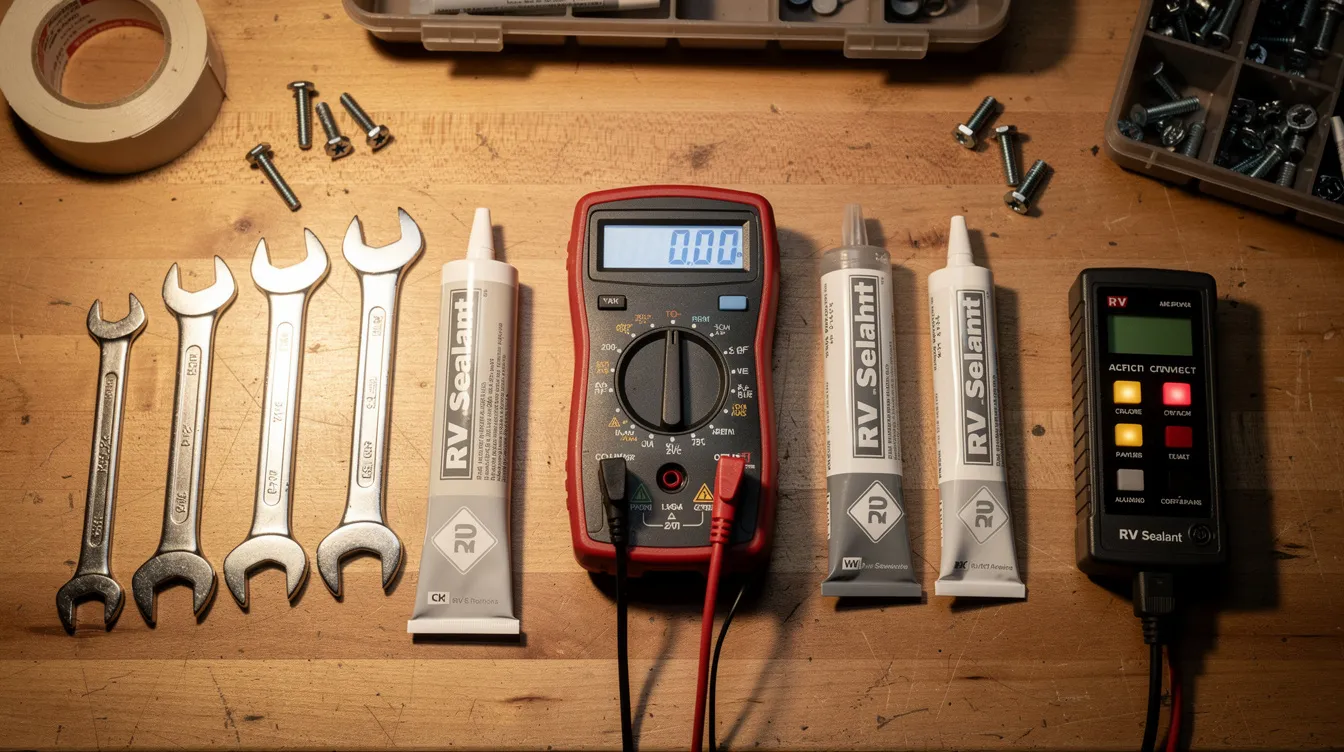
DIY fixes for trailers include tightening loose screws, patching sealant cracks, fixing minor plumbing leaks, and replacing water heater anode rods. You can also swap interior LED bulbs, change house batteries (if you’re comfortable with 12V work), adjust cabinet hardware, and re-caulk a small window seam you can easily reach. These tasks require basic hand tools and a willingness to watch a manufacturer-specific tutorial.
When to Call a Pro Now
Contact a professional immediately if you smell propane anywhere near the trailer, if breakers trip repeatedly, if you notice brake drag or overheating hubs after a drive, if you find soft spots in the floor or roof, if water pours from the ceiling during rain, or if you see scorching or melting near any electrical outlet. Choosing RV-specific repair shops-or mobile techs who specialize in RV work-improves the likelihood of proper service compared to a general mechanic unfamiliar with RV-specific systems.
Cost Expectations
While rates vary by region, typical mobile RV repair costs include a trip fee (often around $190), hourly labor in the $150–$250 range, plus parts. A small leak fix might cost a few hundred dollars. Wait until water has softened the subfloor, and you’re looking at $2,000–$5,000 for plywood replacement and new membrane. Preventive maintenance can save money by addressing small issues before they escalate.
Mobile rv repair often saves money compared to towing to a shop when you factor in fuel, tow vehicle wear, potential roadside breakdowns, and lost campground nights. The experience is faster, and you avoid the inconvenience of being without your trailer for weeks.
Maintenance Checklist to Reduce Repair Bills
Travel trailers require regular maintenance to avoid major repairs. Annual service checks restore RVs to manufacturer requirements. Here’s a basic schedule to follow:
| Task | Frequency |
|---|---|
| Visual roof & sealant inspection | Every 6 months; maintenance every 3–4 years |
| Tire pressure & date-code check | Before each trip |
| Test GFCI outlets | Before each trip |
| Sanitize freshwater system | Annually or after extended storage |
| Run furnace and A/C | Before each travel season |
| Repack wheel bearings | Every 12–18 months |
| Inspect brake shoes & magnets | Yearly |
| Flush water heater & check anode rod | Annually |
| Check battery voltage & terminals | Before each trip |
| Test all exterior & interior lights | Before each trip |
| Routine checks before each trip can include inspecting tires, checking battery voltage, and testing lights. Pre-trip inspections are crucial for RV safety and performance, and routine maintenance includes checking electrical and plumbing systems at regular intervals. |
Regular inspections can catch potential leaks early and prevent extensive damage. For used trailer purchases, pre-purchase inspections are crucial-non-bias third-party inspections are recommended for travel trailers, and these typically follow a comprehensive process. Travel trailer inspections include a 100-point checklist that covers structure, roof condition, appliance function, and safety systems. Annual inspections help maintain travel trailer safety and functionality, and inspections check for leaks, electrical issues, and plumbing integrity.
Keep a Written History
Encourage yourself to maintain a written log of every repair and service-dates, parts used, technician names, and any warranty documentation. RVIA master certified technicians maintain logs of parts and labor, which can support manufacturer warranty claims and protect resale value when you eventually sell the trailer. Future mobile RV or shop techs can quickly understand the trailer’s condition when they see a well-kept record, and buyers will pay more for a trailer with a documented service history.
FAQ: Travel Trailer Repairs & Mobile RV Service
How fast can a mobile RV technician usually get to my travel trailer?
For true emergencies (active propane leak, total electrical failure), some providers offer same-day response when a tech is available in your area. During busy seasons-Memorial Day through Labor Day-expect a 24- to 72-hour window to schedule an appointment. Remote locations or peak holiday weekends may push that timeline longer. If you need help quickly, call early in the day and provide clear symptom descriptions so the tech can prioritize. Many providers list response time estimates on their www page, so check before calling.
Can mobile RV repair handle warranty or extended service contract work?
Many rvia master certified and RVTAA-certified techs can perform warranty-covered repairs, but you’ll need to confirm that the technician or their company participates in your warranty provider’s network. Always get pre-authorization from the warranty company before work begins. Ask the tech if they can submit documentation directly-most experienced mobile techs handle this regularly and know what verifies a claim.
What should I do while I’m waiting for a tech if I have an active leak?
Safely disconnect shore power if water is near any electrical components. Shut off the water pump and city water connection. Place catch pans and towels under the drip. Use painter’s tape and plastic sheeting as a temporary barrier on the interior ceiling to redirect water away from electronics and flooring. Document the damage with dated photos-your insurance provider will want them if the repair qualifies for a claim.
Do I need to move my slide-outs in before the technician arrives?
Ask when you schedule your appointment. Many mobile RV techs prefer slides retracted for initial towing and safety checks, but they may need them extended to work on slide hardware, seals, and motor assemblies. Providing this detail upfront saves time on arrival.
What information should I have ready when I call for RV repairs?
Have the following ready so the tech can provide an accurate estimate and bring the right parts:
- Trailer year, brand, and model (e.g., 2022 Keystone Passport 2400RB)
- VIN if handy
- Appliance model numbers for water heaters, refrigerators, furnaces, or A/C units
- Detailed symptom description (when it started, what you’ve tried, any error codes displayed)
- Clear photos of affected areas
Having these details ready helps the tech work efficiently and ensures your questions get answered on the first call rather than requiring follow-up.
Travel trailers are a significant investment, and they reward owners who stay ahead of small problems. Whether you fix a minor sealant crack yourself or schedule a mobile RV tech to handle brake work and electrical diagnostics, the goal is the same: catch issues early, document what’s been done, and keep your trailer safe for every road ahead. If you haven’t had your trailer inspected in the last year, now is the time to book that appointment.