About 11.2 million U.S. households own an RV. Whether your rig is a travel trailer, fifth wheel, motorhome, or truck camper, keeping it road ready requires knowing what breaks, who can fix it, and when to schedule care. This guide covers common camper repair issues, how mobile rv repair compares to a service center, and how to protect your investment with inspections and preventive rv service.
Key Takeaways
Modern camper repair often happens through mobile rv service, with certified mobile technicians arriving at your campsite, storage lot, or home.
Common rv repairs include electrical issues, roof leaks, slide outs, appliance failures, and seasonal maintenance like winterization.
Many rv owners avoid weeks of waiting at a shop by using mobile rv repair for diagnostics, minor fixes, and routine rv inspections.
Regular preventive rv service (annual roof checks, brake and wheel bearing work, safety inspections) prevents expensive breakdowns on the road.
Choosing between DIY, mobile service, or a full service center depends on the issue’s severity, warranty coverage, and how fast your camper needs to return to travel.
Understanding Camper Repair Basics
Camper repair covers the living systems and weather protection components of recreational vehicles: seals, windows, appliances, plumbing, slide outs, roofing membranes, water and waste systems, propane, and climate control. RV repair, the broader term, also includes chassis, engine, drivetrain, and frame work that typically requires a service center with lifts and specialized tools.
RV manufacturers must comply with over 500 safety-related requirements covering electrical, plumbing, fire, and construction standards. Electrical issues are common and can include wiring failures across both 120V AC and 12V DC systems. Plumbing leaks can lead to water damage that spreads behind walls for weeks before you notice. Slide-out problems can involve motor or seal failures. Weather and moisture can enter through worn door seals. These systems interact; untrained work on any of them risks fire, carbon monoxide exposure, or structural rot.
Typical failure scenarios include water leaks after a heavy summer storm, tripped breakers after plugging into a faulty campground pedestal, slide outs sticking in humid July weather, and A/C units unable to cool during 100°F heat waves.
Common Camper Problems & How They’re Typically Fixed
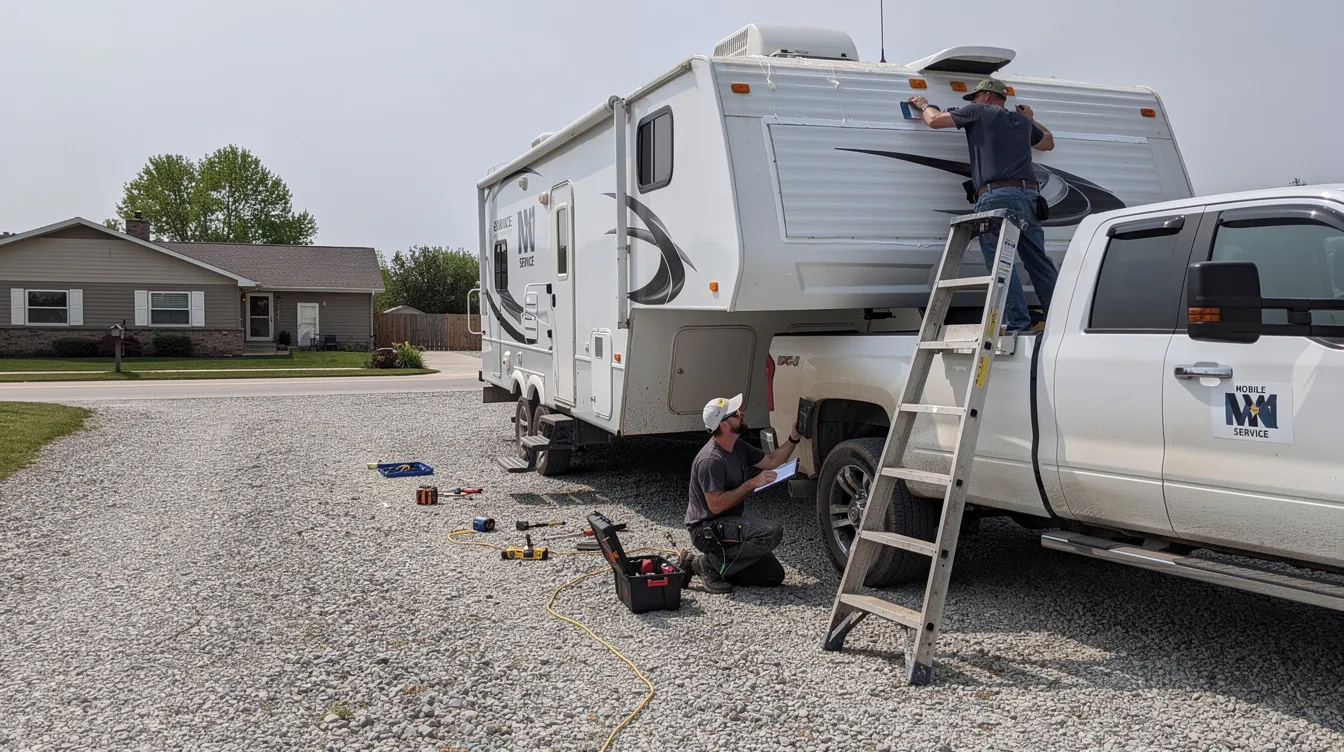
These are the issues mobile technicians and shop techs handle every week, organized by system.
Roof and seal leaks
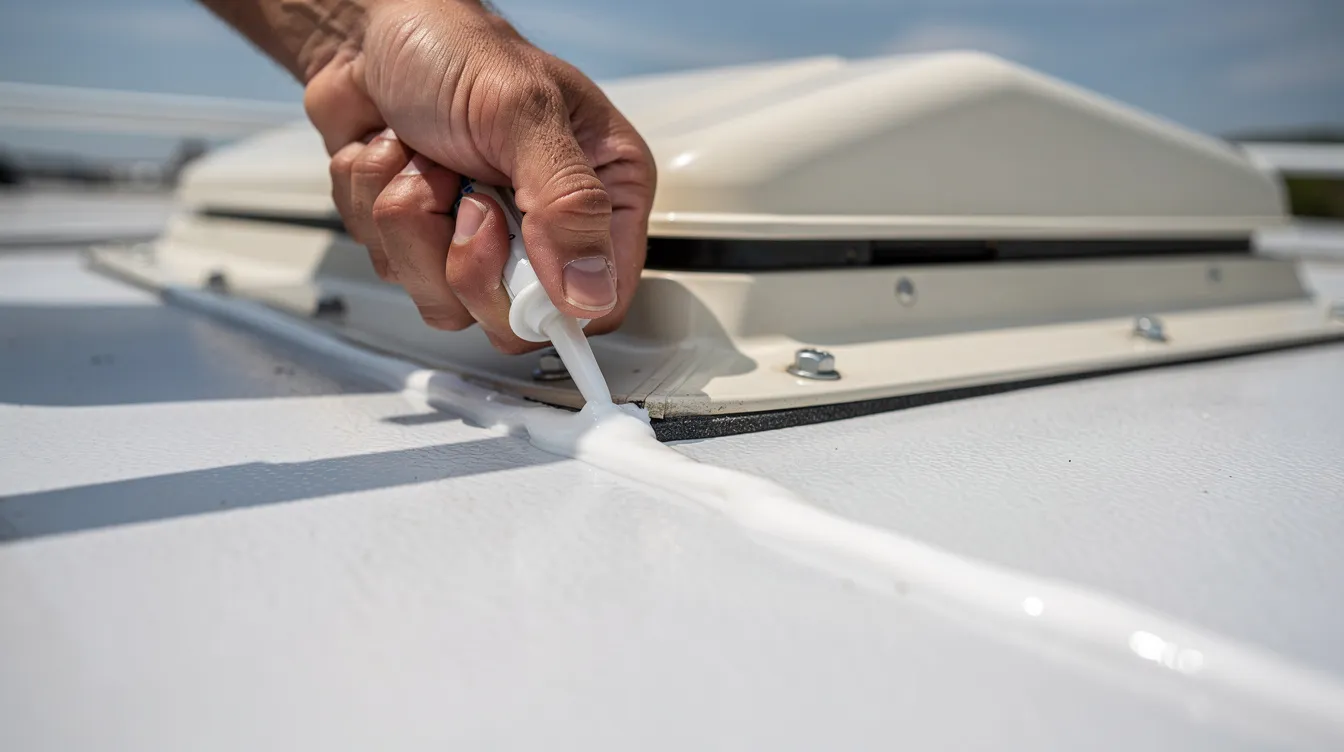
Inspect roof lap sealant and caulking regularly to prevent leaks. Scrape away loose caulk before resealing.
Use self-leveling sealant for horizontal roof penetrations (vents, A/C units). Use appropriate RV sealants compatible with your roof material; house silicone on EPDM or TPO often voids the warranty.
Roof leaks can escalate into major damage if ignored. Subfloor areas can loosen from frame joists due to heavy traffic or water exposure; inject wood-repair epoxy to fix localized soft spots in flooring.
Electrical problems
Check for blown fuses in the 12V DC system to troubleshoot lighting issues. Electrical repairs include wiring and 12-volt system failures such as dead house batteries after storage and converter/charger faults.
Diagnostic steps: multimeter readings on battery terminals, checking shore power pedestal voltage, inspecting fuse and breaker panels.
Slide outs and leveling systems
Common rv repairs include slide-out and leveling system issues. Fixes range from lubricating rollers and realigning rails to replacing gear motors and resetting control boards.
Climate control and appliances
Air conditioners often fail to cool effectively in high heat; compressor seal leaks and fan motor burnout are frequent culprits.
Replace a corroded anode rod to prevent water heater degradation. Use a socket wrench to remove anode rods from water heaters. Regular maintenance of anode rods prevents winter freeze damage.
Basic troubleshooting can aid in identifying issues with rv appliances before calling a professional.
Plumbing and water systems
Blown fuses or clogged strainers can cause low water pressure. Clean strainer bowls to maintain water pump efficiency. Tighten loose fittings to fix plumbing leaks in campers.
Replace damaged seals and gaskets to prevent leaks from toilets.
Doors, windows, and screens
Inspect tracks and lubricate components for sticking windows. Replace weather stripping to enhance doors’ sealing efficiency. Torn screens let bugs in and require repair for effective sealing.
Mobile RV Repair vs. Traditional Service Centers
RV owners in 2024 through 2026 choose between mobile rv repair and brick-and-mortar shops. Here is how they compare.
Mobile rv repair services can come to your location. Certified mobile technicians in Tucson, AZ arrive at a driveway, storage lot, or campsite with tools and parts. Mobile rv technicians can service RVs within a 100-mile radius in most regions.
Mobile rv services include plumbing, electrical, and appliance repairs. Mobile technicians can repair plumbing issues on-site. Mobile rv service in Tucson can handle appliance repairs like refrigerators. Mobile technicians perform seasonal maintenance on heating and cooling systems.
Mobile rv repair can save days of dealer drop-off waiting. About 40% of RV issues are solved on the first call. Certified mobile techs charge $125 to $185 per hour with trip fees of $0 to $95 within 25 to 35 miles. Routine repair invoices run $285 to $625; complex work like slide motor replacement runs $850 to $2,400.
A service center makes more sense for collision damage, full roof membrane replacement, axle or frame work, and engine or transmission repairs on motorhomes. These jobs require lifts, alignment equipment, and facility space a mobile unit cannot carry.
Both options work with extended warranty companies. Some plans, like America’s RV Warranty, include up to $500 per issue for a mobile mechanic’s service fee.
Planning Preventive Maintenance, RV Service & Inspections
Regular rv service and scheduled camper maintenance reduce surprise breakdowns during peak travel months. Here is a framework.
Inspect roof seams and vents at least twice a year. Pre-trip inspections can prevent major RV issues. Annual inspections are crucial for RV safety.
Pre-purchase inspections help buyers understand RV condition before money changes hands. Regular inspections can save thousands in repair costs over the life of the rig.
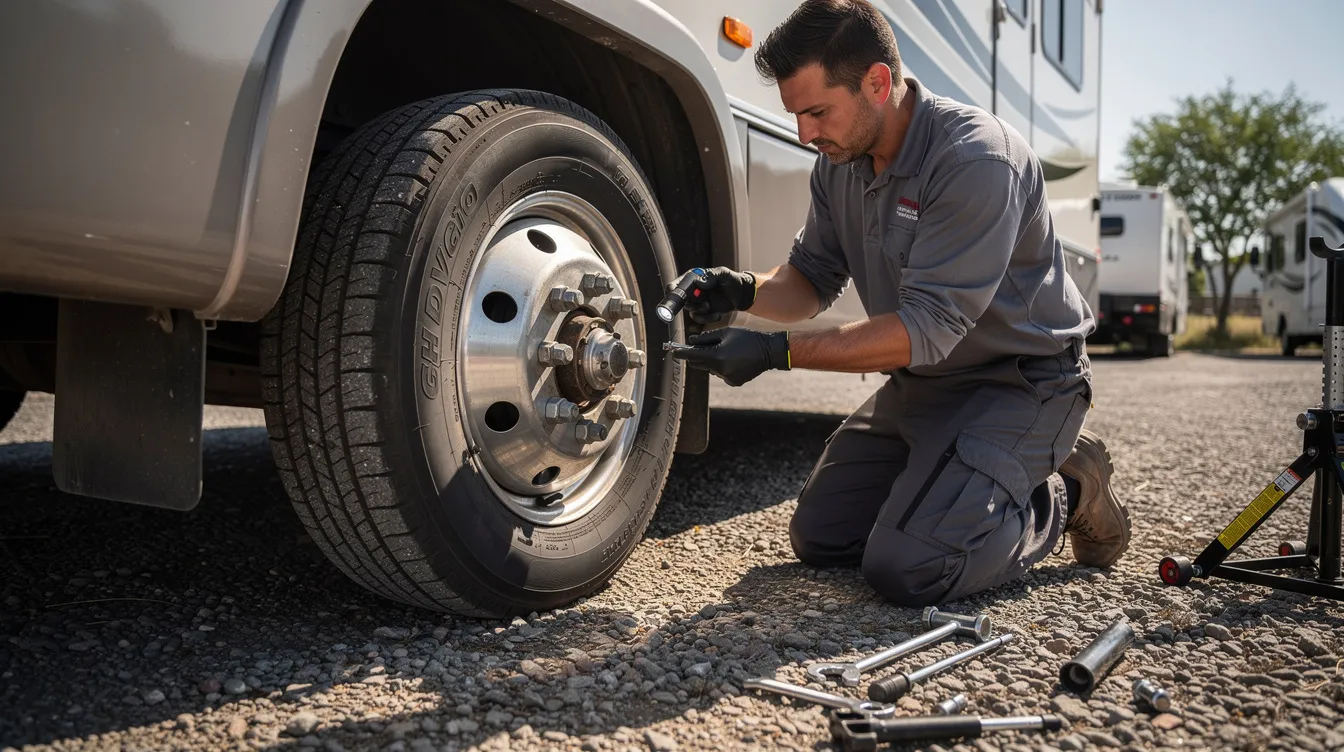
Schedule brake and wheel bearing service every 12 months or 10,000 to 12,000 miles, whichever comes first. Check suspension and tire condition before long trips.
Winterize in late fall by blowing out water lines and adding RV antifreeze. De-winterize in early spring with a full system flush and leak check.
Keep dated service records, photos, and receipts in a binder or digital folder. These support warranty claims, improve resale value, and help mobile technicians diagnose recurring problems fast.
Many mobile rv service providers offer recurring maintenance visits with written inspection reports, including photos and notes you can review before each trip, especially from mobile RV repair services in Marana, AZ.
Choosing a Camper Repair Provider & What to Expect
When something breaks right before a planned family trip, balancing urgency, safety, and cost matters.
Look for RVIA or RVTI credentials, EPA 608 certification for refrigerant work, and LP gas handling permits. Check reviews from rv owners on Google and Yelp from the last one to three years. Verify proof of insurance.
Provide your camper’s year, make, model, and VIN. Describe the issue: error codes, burning smells, noises, weather conditions at failure, and what troubleshooting you have already tried. Photos and short videos save the tech diagnostic time on site.
A typical mobile service visit follows this pattern: you schedule a time window by phone or email, the tech arrives, does a walk through, runs diagnostics, explains findings, gives a cost estimate with parts and labor itemized, orders parts if needed, completes the fix, and tests the repair with you present.
Ask for written estimates before authorizing rv repairs. Expect text or email confirmations and clear invoices you can use for warranty or insurance claims.
Red flags: vague prices quoted only after work is done, no business name or page on their website, and reluctance to answer questions about electrical or propane expertise.
DIY vs. Hiring a Pro: Safety, Warranty & Cost Considerations
Many camper repairs are DIY-friendly with basic tools. Replacing cabinet latches, swapping LED light bulbs, cleaning A/C filters, and changing showerheads are safe starting points for handy rvers who follow manufacturer instructions.
Call mobile technicians or a service center for repeated breaker trips, burning smells from outlets, propane odor inside or outside the camper, soft spots in the floor, or visible roof membrane damage. Unauthorized modifications or incorrect installation of parts can void portions of an rv warranty or extended service plan, so keeping documented professional rv service records helps protect your coverage.
Cost trade-offs are real: DIY saves money on labor, but a poorly sealed roof can cause hidden water intrusion, mold, and electrical shorts that cost far more to fix later. A balanced approach works best. Handle simple maintenance yourself, choose a trusted mobile rv service for complex or safety-critical work, and book a service center for structural or chassis repairs that require shop equipment and expertise.
Frequently Asked Questions About Camper Repair
How quickly can a mobile RV repair service respond if my camper breaks down at a campground?
Response times vary by region and season. During peak travel months (May through October), many mobile technicians in busy camping areas aim for same-day or next-day service. In remote campsites or during winter, waiting may extend to several days due to travel distance and parts availability.
Are RV inspections necessary if my camper is only a few years old?
Absolutely. Even one- to three-year-old campers benefit from yearly inspections. Sealant can crack after a single season of UV exposure, tires age regardless of mileage, and electrical issues develop when rigs sit in storage for months. An annual inspection is a small price compared to the cost of finding rot or wiring damage mid-trip.
Can mobile RV service handle warranty or insurance work?
Many mobile rv repair providers work with extended warranty companies and insurance carriers. Some plans, like ARW, explicitly allow mobile service claims and cover the mechanic’s dispatch fee. Always verify with your specific policy before authorizing work.
What information should I have ready before calling a camper repair provider?
Gather your camper’s year, make, model, and VIN. Note your exact location (campsite number or street address). Describe symptoms, error codes, and any upgrades or recent work. Include clear photos or video. This helps the tech bring the right parts and diagnose the issue on the first visit.
Do I need to move my camper for most repairs?
Most common repairs (electrical issues, appliances, slide outs, leaks, plumbing) can be completed on site by mobile technicians. Major collision work, frame repairs, full roof replacements, and hitches or suspension overhauls on motorhomes typically require a fully equipped shop with lifts and welding equipment.