
There’s nothing worse than cranking up your camper air conditioner on a sweltering afternoon only to realize it’s blowing warm air and dripping water from the ceiling. If this sounds familiar, your rv ac unit is almost certainly frozen. The good news: most freeze-ups are straightforward to diagnose and fix yourself. This guide walks you through exactly why it happens, how to thaw it safely, and what routine maintenance keeps it from happening again.
Key Takeaways
A camper air conditioner “freezing up” means ice is forming on the evaporator coil, choking air flow and making your rv feel warmer instead of cooler.
The most common triggers are a dirty air filter, clogged evaporator or condenser coils, low fan speed in high humidity, blocked vents or return air grilles, air leaks inside the ac unit, and occasionally low refrigerant.
Immediate response checklist:
Switch the thermostat to “fan only – high” and turn off the compressor.
Let the fan run for 1–2 hours to melt ice.
Open interior vents and cabinet doors.
Place a towel under the rv ac to catch meltwater.
Maintaining proper airflow is critical to prevent air conditioner freeze-ups. Only suspected refrigerant leaks or electrical faults typically require a professional.
What Does It Mean When a Camper AC “Freezes Up”?
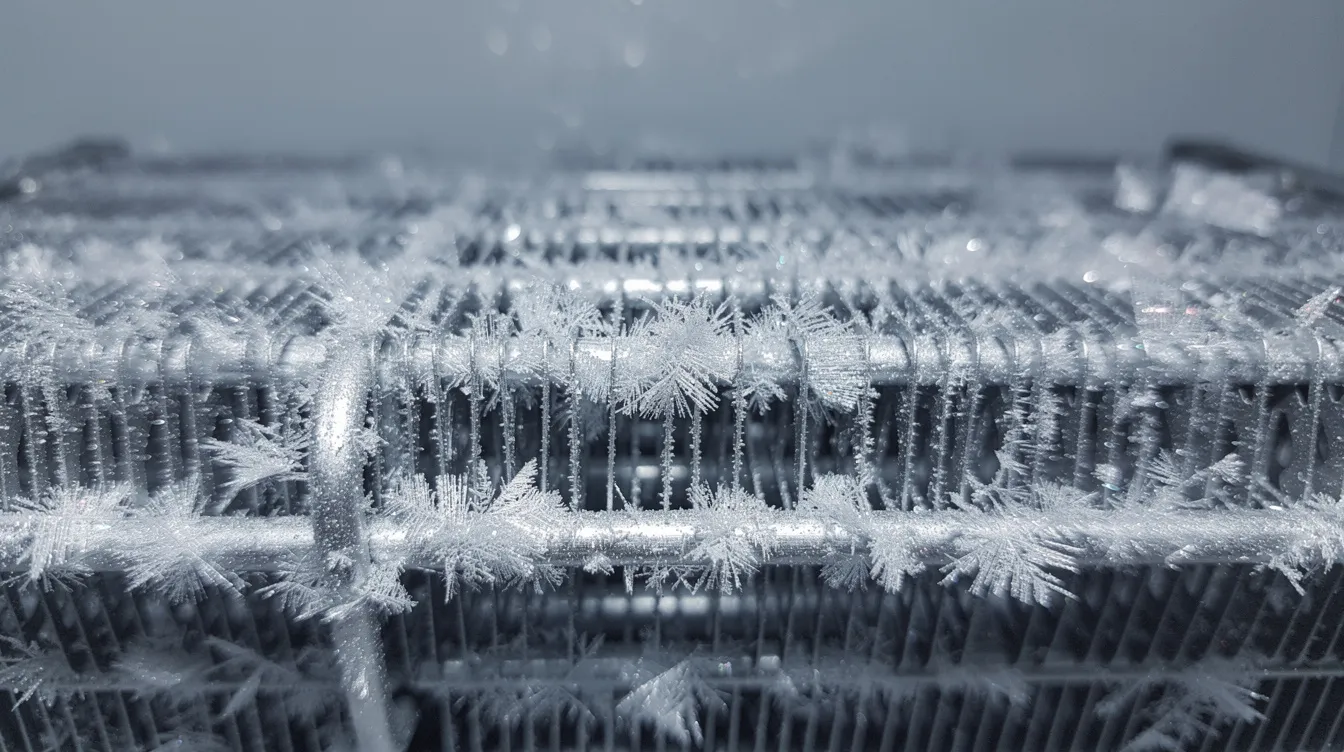
When your camper ac freezes up, ice accumulates on the evaporator coil and sometimes on the suction line, blocking cold air from reaching your living space. Instead of cool, dry air from the vents, you get weak airflow and lukewarm output.
Under normal operation, rv air conditioners pull warm, humid cabin air through an air filter and across a very cold evap coil. Refrigerant inside the coil absorbs heat, moisture condenses into a drain pan, and cooled air gets pushed back into the camper. The evaporator coil typically runs around 40–45°F-cold enough to cool the air but above freezing.
When air flow drops or heat transfer is impaired, coil temperature can plunge below 32°F. Condensed water turns to ice instead of draining away, building thick frost on the fins and refrigerant lines. Symptoms include reduced cooling after 30–90 minutes of run time, visible frost behind the return grille, and water dripping inside once the ice melts.
This isn’t limited to old RVs. Even a brand-new unit can ice over if you run the fan on low speed in high humidity with a dirty air filter.
Quick Step-By-Step: How to Safely Defrost a Frozen Camper AC
A frozen air conditioner is rarely an emergency, but you need to thaw it properly before diagnosing the root cause. Turn off the ac unit to defrost it safely and follow these steps:
Set the thermostat or control board to “fan only – high” and switch cooling off. Run the fan to help melt the ice faster.
Let the fan run for 60–120 minutes until all visible frost on the evaporator coil and suction line is gone.
Open interior cabinet doors and vents to improve warm air flow through the coil while thawing.
Place towels or a shallow pan under the interior ceiling trim to catch dripping water.
Once fully thawed and dry, restart on “cool – high fan” and monitor for re-freezing.
Safety warning: Do not chip ice with screwdrivers or knives, and never pour hot water into the rooftop shroud. These actions can bend fins, crack plastic, or flood your rv ceiling.
If your rv ac freezes again within an hour of restarting, proceed to the troubleshooting sections below.
How an RV Air Conditioner Stays Cool Without Freezing
Normal operation depends on a balance of three things: correct refrigerant pressure and temperature, steady airflow through the filters and vents, and efficient heat rejection at the condenser coils.
Think of the system as two connected sides:
Inside: The evaporator coil and blower pull warm cabin air through the air filter, cool and dry it, then push supply air back into the living space.
Outside: The condenser coil and fan on the roof dump absorbed heat to the outside air, keeping the sealed system pressures in the correct range.
When airflow drops-because of a clogged filter, blocked returns, or low speed fan setting-the evaporator pressure falls and coil temperature can plunge below freezing. The same problem happens if the condenser can’t reject heat due to dirt or fan failure.
Low refrigerant also disrupts this balance. With too little refrigerant, system pressure drops, the evaporator runs colder than designed, and coils can ice even in moderate conditions.
Modern rooftop rv air conditioners often include a freeze sensor or thermistor on the evaporator coil. Inspecting the freeze sensor is crucial for proper air conditioner operation, but these sensors only limit damage by shutting off the compressor-they don’t solve the underlying airflow issue.
Most Common Causes of a Camper Air Conditioner Freezing Up
The majority of freeze-ups trace back to poor airflow rather than major component failures. Camper air conditioners can freeze up due to restricted airflow, and several factors contribute:
Restricted air flow at the return (dirty or missing air filter, blocked grille)
Dirty evaporator or condenser coils that can’t transfer heat properly
Fan problems or running the blower on low speed in high humidity
Improper thermostat setting or faulty thermostats forcing long compressor cycles
Low refrigerant or mechanical issues (less common but serious)
Multiple small issues often stack together. A lightly clogged filter plus closed vents plus 90% relative humidity on a July weekend in Florida can be enough to trigger the same problem. Work through the sections below systematically, starting with simple visual checks that require no prior HVAC experience.
Dirty Air Filters and Blocked Airflow at the Return
A dirty air filter is the single most common reason a camper air conditioner ices over-and the easiest to fix. Dirty air filters restrict airflow and can cause freeze-ups by starving the evaporator coil of warm air, which drops refrigerant pressure and temperature until moisture freezes on the coil surface and fins.
Most rv ac filters are thin foam or mesh panels behind the interior grille or plenum cover, typically secured with a few screws. Here’s how to keep them in shape:
Inspect every 2–4 weeks during heavy summer use.
Vacuum dust gently, then wash foam filters in lukewarm water with mild dish soap. Let them dry completely before reinstalling.
Replace damaged, moldy, or paper filters rather than washing them. Clean air filters should be replaced monthly to prevent freeze-ups.
Never block the return grille with pillows, storage bins, or hanging fabrics-it has the same effect as a clogged filter.
For full-time RVers, monthly checks are a minimum. Occasional users should inspect at the start and midway through every long trip. Replace or clean air filters at least once per month to keep air flow strong and your unit running efficiently.
Dirty Evaporator and Condenser Coils
Both sets of coils in your system affect freezing. The evaporator is inside the camper air flow path; the condenser sits outside on the roof.
Dirty evaporator coils can cause air conditioner freeze-ups. Dust, pet hair, pollen, and debris accumulate on the thin aluminum fins, insulating the metal and restricting air flow between them. The result:
Reduced heat transfer, forcing refrigerant to get colder to do the same work
Uneven frost patterns where one section ices solid while other sections stay warm
Longer run times, higher power draw, and more frequent freeze-ups
On the condenser side, dirt and bugs coating the rooftop coils prevent the refrigerant from dumping heat effectively. This distorts the normal pressure and temperature balance and can paradoxically trigger evaporator freezing.
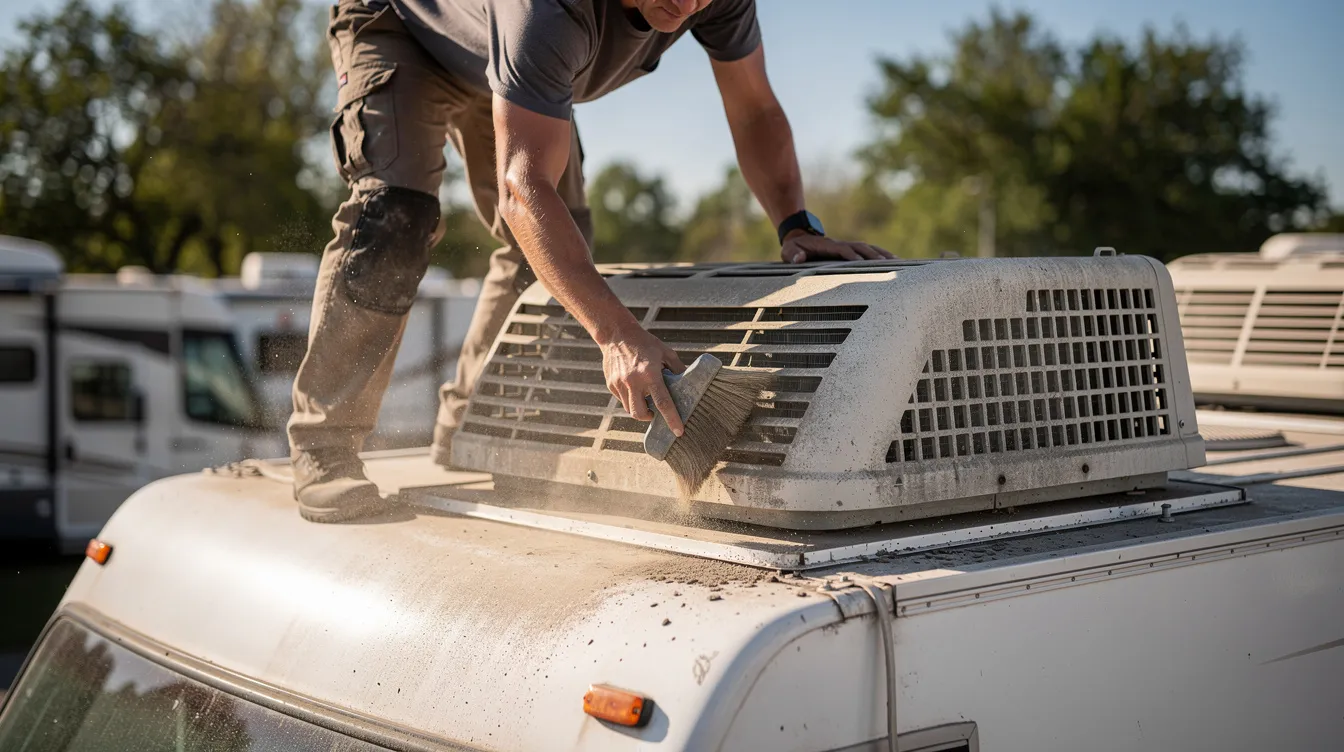
Cleaning basics: Remove the rooftop shroud, use a soft brush and low-pressure water or a coil cleaner rated for aluminum fins, and clean in the direction of the fins to avoid bending them. Inspect coils for bent fins and damage regularly-a fin comb can straighten minor damage. Clean evaporator and condenser coils monthly during heavy use seasons, and at least once per cooling season for occasional campers.
Fan Speed, High Humidity, and Air Leaks Inside the AC Unit
Fan speed and moisture level work together. High humidity can overload an air conditioning system, and when you combine it with low air flow from a slow fan, ice formation accelerates.
Low vs. high fan speed:
On low speed, less warm air passes over the cold evaporator, so coil temperature drops below 32°F faster.
Running the fan on high reduces the chance of freezing by washing more warm air across the coil and blowing condensed water off the fins.
This matters most during muggy nights in humid climates-coastal camping, Southeast U.S. summers, or any time you’re cooking, showering, or have several people breathing in a closed camper without exhaust fans running.
Air leaks and baffle problems:
In ducted rv ac units, a flow divider or baffle separates hot return air from cold supply air. A poorly sealed AC baffle can lead to ice formation because cold supply air short-circuits back into the return, recooling air that’s already cold and driving coil temperatures toward freezing.
Fix: With power off, remove the interior shroud, inspect foam dividers and metal baffles, and seal any air leaks in the ac unit with aluminum duct tape or replacement foam so hot and cold air streams stay separated.
In consistently humid climates, favor high fan speed and consider running a small dehumidifier inside the camper to reduce the moisture load on your ac unit.
Thermostat Problems, Incorrect Settings, and Improperly Sized Units
Control issues and sizing mistakes are less common than airflow problems but can cause chronic freezing.
Thermostat setting mistakes:
Setting the thermostat unrealistically low (e.g., 60°F on a 95°F day) forces continuous operation, increasing freeze risk. Raise the thermostat setting to a more reasonable range like 72–76°F to prevent freezing.
Using auto fan mode in humid conditions can drop fan speed at exactly the wrong time, allowing coils to freeze while the compressor keeps cycling.
Running the air conditioner when outside temperatures are below 60°F can cause freezing because the heat load is too low to keep the evaporator above 32°F.
Thermostat malfunctions: Dust buildup or loose wiring on wall thermostats in older RVs can cause short-cycling or non-stop compressor operation. Bad temperature sensor equipment on the evaporator coil can fail to detect freezing, allowing ice to build thick before the system shuts down.
Sizing issues:
Problem | What Happens |
|---|---|
Undersized unit (e.g., 13,500 BTU on 30+ ft trailer) | Runs nearly nonstop, coil overcools, freeze-up risk climbs |
Oversized unit | Cools too fast, short cycles, doesn’t remove humidity, encourages icing |
Favor “cool – high fan” instead of auto in problem conditions. If your camper never reaches set temperature despite clean coils and filters, consult an RV HVAC professional about BTU sizing.
Low Refrigerant, Mechanical Failures, and When to Call a Professional
Unlike a window ac unit or home system, most rooftop rv air conditioners use a sealed system not designed for homeowner refrigerant top-offs. Low refrigerant levels can lead to air conditioner freezing, and signs typically point to a leak or component failure.
Red flags that suggest low refrigerant or deeper mechanical problems:
Freeze-ups accompanied by hissing, bubbling, or oily spots on tubing or joints
Poor cooling and coil icing even after cleaning air filters and both coils with strong fan air flow
Very short compressor cycles or continuous compressor operation with little temperature change
Low refrigerant lowers system pressure, which drops evaporator temperature below design limits, making ice formation almost inevitable. Diagnosing refrigerant charge requires gauges, temperature measurement, and EPA-certified handling-do not attempt to drill, cut, or tap lines on a rooftop ac unit. A recharge must be done by a qualified technician.
Other red flags needing professional security service:
Non-spinning condenser fan
Repeatedly tripping 20–30 amp breakers
Burnt smells or visible arcing at capacitors
Document your symptoms, dates, ambient temperatures, and thermostat settings before calling a mobile RV technician so diagnosis goes faster.
Step-By-Step Troubleshooting Checklist for a Freezing Camper AC
Follow this sequence in a single afternoon, moving from the easiest checks to more involved inspections:
Confirm settings: Verify fan is on high and thermostat is set to a reasonable value (72–76°F). This alone solves the same problem for many owners.
Inspect filters: Clean or replace air filters and clear any obstructions from the return air grille.
Check supply vents: Open most vents fully to maximize airflow. Closed vents in unused rooms still restrict the system.
Examine the evaporator: Remove the interior shroud to visually inspect the evaporator coil for dirt, ice, or crushed fins. Clean gently if dirty.
Access the roof unit: If comfortable on the roof, examine condenser coils and fan operation. Clean debris from fins as needed.
Check baffles and seals: Look for obvious baffle gaps or torn foam inside the plenum. Reseal with aluminum duct tape or replacement foam to plug any gaps where cold and warm air streams mix.
After each major change, run the air conditioner for at least 30–60 minutes and monitor for re-freezing under similar outdoor temperature and humidity. If the ac unit still freezes after these steps-especially if coils ice within 15–20 minutes-low refrigerant, a failing fan motor, or a thermostat problem is likely, and professional service is recommended.
Preventive Maintenance Tips to Avoid Future Freeze-Ups
A simple seasonal and monthly plan keeps rv air conditioners efficient, reduces energy draw, and dramatically lowers freeze-up risk. It is extremely important to stay consistent with routine maintenance.
Suggested intervals:
Task | Frequency |
|---|---|
Clean or replace air filters; vacuum return grilles; wipe ceiling surfaces near unit | Every 2–4 weeks in heavy use |
Inspect and clean evaporator and condenser coils; check fan blades and hardware; inspect rooftop shroud | Start of each cooling season |
Reinspect coils in dusty or high-bug regions; rinse condenser fins | Mid-season (around July) |
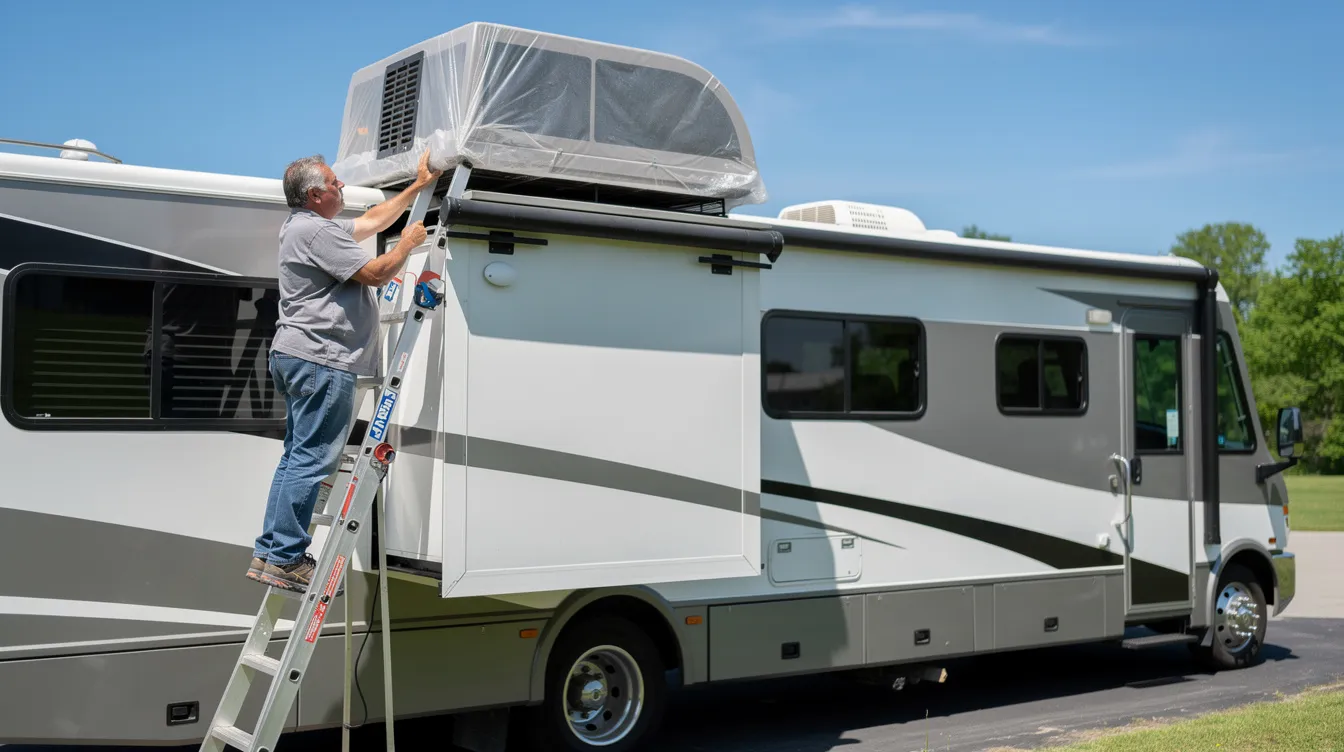
Cover rooftop ac with a breathable cover; close interior vents | Before long-term storage |
Inspect and clean coils to prevent future freeze-ups, and run the fan on high to reduce freezing risk whenever humidity is elevated.
Operating habits that help:
Avoid setting the thermostat extremely low
Open roof vents for 20 minutes to reduce humidity during and after cooking or showers
Use exhaust fans to vent moisture before it reaches the ac
Keep a simple log noting dates of filter changes, coil cleaning, and any freeze-up incidents along with location and approximate outdoor conditions
A bit of prevention goes a long way toward keeping your camper cool and comfortable all season.
FAQ: Camper Air Conditioner Freezing Up
Below are answers to related questions rv owners commonly ask after dealing with a freeze-up.
How long does it take for a frozen RV AC to thaw completely?
Thaw time depends on ice thickness and ambient temperature but generally ranges from 45 minutes to a few hours. Running the fan on high with the compressor off speeds up the process considerably, while turning the whole unit off leaves ice in place much longer. If solid ice is still visible on the evaporator coil after 2–3 hours of fan-only operation, check that the fan is actually moving a good volume of warm air and that nothing is blocking the return.
Is it bad to keep running my camper AC if the coils are frozen?
It is not recommended to run the compressor while the evaporator coil is encased in ice. Ice acts as an insulator, so the unit wastes electricity while barely cooling, and the compressor can overheat or experience abnormal pressures that risk long-term damage. It is usually safe to run fan-only mode during a freeze-up to help melt the ice, as long as there are no unusual noises or smells.
Can high altitude or very hot weather make my RV air conditioner more likely to freeze?
High altitude and extreme heat can push an ac unit closer to its design limits, but they typically cause poor cooling before directly causing freezing. At altitude, the condenser has less dense air to reject heat. In intense heat waves, longer run times and higher humidity condensate rates add stress. In such conditions, keeping coils clean, filters fresh, and fan speed on high becomes even more important.
Should I cover my rooftop AC when I’m not using the camper?
A breathable, UV-resistant cover can protect the shroud and reduce debris buildup, but plastic tarps or non-breathable covers trap moisture and promote corrosion or mold. If you use a cover, remove it before operating the unit and inspect for nests, leaves, or other obstructions each spring. Even without a cover, annual cleaning of the condenser coils and a quick shroud inspection is usually enough for most seasonal RVers.
Can I upgrade my RV AC to a different model to reduce freeze-ups?
Newer high-efficiency rv air conditioners often feature better fan designs, improved coil geometry, and smarter control boards that monitor coil temperature to limit freeze-ups. Upgrading within the same BTU range but with a higher EER and stronger blower can improve airflow and comfort without increasing power draw. Consult your RV manufacturer or a qualified technician about electrical capacity, roof opening size, and duct compatibility before swapping to a different ac unit as a replacement.