Nothing cuts a summer camping trip short like stepping into a sweltering RV because the air conditioner won’t stay on. If your RV AC breaker keeps tripping, you’re dealing with one of the most common-and most frustrating-electrical issues on the road. The good news is that most causes are identifiable and fixable, often without a service appointment.
This post walks you through the likely reasons, from weak shore power to a failing compressor, and gives you a clear troubleshooting path so you can get back to enjoying cold air instead of waiting in the heat.
Key Takeaways
A tripping RV AC breaker is usually caused by circuit overload, weak shore power, or a problem inside the AC unit itself-not just a “bad breaker.” An RV air conditioner breaker typically trips due to excessive current draw, so finding the source of that draw is the real fix.
Before doing deeper troubleshooting, unplug non-essential appliances, reset the AC breaker once, and verify shore power voltage at the pedestal. These three steps rule out the most common culprits in minutes.
Low campground voltage, dirty air filters and condenser coils, or a failing compressor and fan motor are the most frequent reasons an RV AC breaker keeps tripping under load. Dirty coils or filters restrict airflow and can cause overheating that forces the system to draw more amps.
Repeated breaker resets are unsafe. If the AC breaker trips again after a single reset and basic checks, stop and investigate the root cause or call a professional. Continuing to flip the breaker back on risks overheating wiring and damaging equipment.
Options like an EasyStart soft starter and better power management can dramatically reduce startup surge and keep the air conditioner running reliably on shore power or generators.
Why Your RV AC Breaker Keeps Tripping (Quick Diagnosis)
Your AC breaker exists to protect wiring and equipment from dangerous overcurrent. When it trips, it’s doing its job. The goal isn’t to keep flipping it back on-it’s to find the root cause so the problem doesn’t come back.
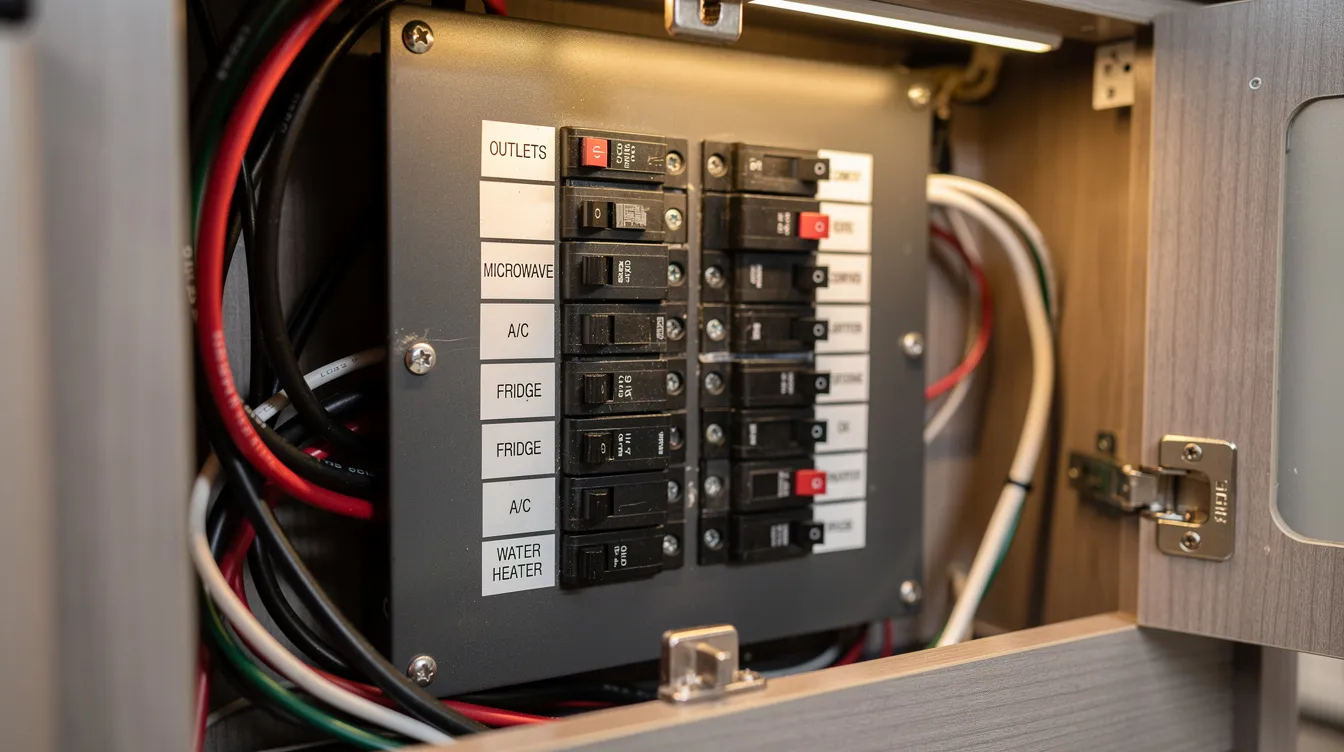
The “AC breaker” in this context is the specific breaker inside your RV’s 120 VAC distribution panel that feeds the rooftop AC unit. Depending on your rig and model year, this is commonly a 20-amp or 30-amp breaker. It’s separate from the RV’s main breaker at the shore power inlet.
Here are the three most common high-level reasons your breaker trips:
Circuit overload from running too many appliances at once-think microwave, electric water heater, and the air conditioner all pulling power from the same 30-amp service.
Weak or low-voltage shore power at a busy campground pedestal, which forces the AC unit to draw more amps to compensate.
Mechanical or electrical problems inside the AC unit itself-a struggling fan, failing compressor, or worn wiring that causes excessive current draw, which can lead to tripping circuit breakers.
First Things to Check
Before you grab a multimeter or climb on the roof, run through this quick list:
Turn the AC off at the thermostat and unplug high-draw items like the microwave, electric water heater, hair dryer, and space heaters.
Open the RV’s main panel and confirm that only the AC breaker is tripping, not the main breaker. This distinction helps you isolate the problem to the air conditioner circuit.
Walk outside and check the shore power pedestal and your RV power cord connection. Look for heat, discoloration, or loose plugs at both ends.
One practical note: if you’re trying to look up wiring diagrams or electrical manuals for your specific AC unit online, be cautious about downloading files from unknown sites. Many manufacturers’ websites, including pages on www domains for brands like Coleman, now use a security service to protect their download pages from malicious bots. You may see a message displayed while the website verifies your browser-this is normal. The site uses a security service, and performing security verification is standard before access is granted. If the verification successful result isn’t shown, or if a page asks you to respond with a ray id or other suspicious prompt, protect yourself against malicious bots by only using official manufacturer pages.
If you’ve ruled out overload and shore power issues and the breaker trips again, the likely problem is inside the air conditioner or the breaker itself. That requires deeper troubleshooting, which we’ll cover next.
Common Electrical Causes: Shore Power, Overload, and the Breaker Itself
Many RV AC breaker problems aren’t actually “AC failures” at all. They stem from power supply and panel issues that trick owners into thinking the air conditioner is broken. Let’s break down the electrical side.
Shore Power Problems
Crowded campgrounds on hot July and August afternoons are notorious for voltage sag. When dozens of rigs run their ACs simultaneously, pedestal voltage can drop well below the nominal 120 V-sometimes to 105 V or even lower. Real-world reports from RV owners show pedestals reading as low as 99 VAC under load.
Low incoming voltage can force the air conditioner to pull higher amperage to deliver the same cooling power. That higher amperage is often enough to push the AC breaker past its rating, causing repeated trips.
Here’s what you can do about shore power issues:
Use a plug-in voltmeter or an EMS/surge protector at the pedestal to monitor real-time voltage under load-not just the idle reading.
If voltage sags below roughly 105–110 V whenever the AC unit starts, the safest move is to shut the AC off and talk to campground staff or switch to a different site.
Check your shore power cord itself. One RV owner on Reddit solved persistent tripping simply by replacing a thin, worn cord with a heavier-gauge, shorter one that reduced voltage drop.
Circuit Overload in the RV
A standard 30-amp RV service gives you about 3,600 watts of total capacity. A typical 13,500–15,000 BTU rooftop AC unit draws 12–16 amps while running. That sounds like plenty of headroom-until you add a microwave (10–13 amps), an electric water heater (10–12 amps), or a hair dryer (12–15 amps).
Stacking those loads easily exceeds 30 amps and can trip either the main breaker or the air conditioner branch breaker.
The RV main breaker (for example, 30 A) protects the entire system. The AC branch breaker protects only the air conditioner circuit. Both can trip when overloaded.
Stagger your electricity usage: don’t run the microwave or coffee maker while the AC compressor is cycling on. Switch your water heater to propane mode instead of electric to cut the load.
In addition, turn off any space heaters or induction cooktops before starting the AC.
The AC Breaker Hardware Itself
Breakers wear out. A faulty or weak circuit breaker can trip at lower amperage thresholds than it’s rated for. This is especially common in rigs from the early 2000s where internal components have degraded from years of heat cycling.
A bad circuit breaker can cause frequent tripping issues even when the AC unit and power supply are perfectly fine. Here’s how to check:
With power off, feel the breaker. A breaker that’s warm or hot after a trip-or that feels loose in the panel-is suspect.
Visually inspect for burn marks, melted plastic, or discoloration on the breaker and surrounding bus bar.
Circuit breakers should match the amperage of the AC unit. If someone previously installed a mismatched breaker, replace it with one that’s properly rated and compatible with your panel brand.
If you’re not comfortable doing the swap, have a qualified RV tech or mobile RV repair service in Tucson, AZ handle it.
Generator vs. Shore Power
A small portable generator that cannot handle the AC unit’s startup surge will stall, shut down, or cause the AC breaker to trip. A generator must match the AC’s startup load to avoid trips-not just the running watts.
For example, if your AC draws 16 amps running but surges to 50+ amps at startup, a 2,000-watt generator simply can’t keep up. You’ll need a larger one, or you can install a soft starter to bring that surge into range.

Mechanical & AC Unit Problems That Trip the Breaker
Once shore power and obvious overloads are ruled out, the most likely reason for continuing breaker trips is the air conditioner itself-typically restricted airflow, overheating components, or internal electrical faults.
Airflow and Cleanliness Issues
Dirty air filters can cause circuit breakers to trip. When return air filters inside the RV are clogged, airflow across the evaporator coils drops. The system has to work harder, and that means more amps through the compressor motor.
Inspect and clean or replace filters at least once a month during heavy summer use. Regularly clean or replace the air filter to prevent trips-this single step solves more breaker problems than most owners realize.
Dirty condenser coils on the rooftop unit are equally problematic. Dust, leaves, and road grime from interstate travel can insulate the coils and cause overheating. Dirty condenser coils can lead to breaker trips and can also cause the circuit breaker to trip repeatedly if left unaddressed.
Cleaning the air filters and coils can improve airflow and reduce trips. Plan for annual coil cleaning-pre-season and post-season is ideal. Safely disconnect power, remove the AC shroud, and visually check for matted debris.
Fan and Blower Problems
A stalled or slow-running fan motor-indoor or outdoor-reduces airflow across coils, causing compressor temperatures and current draw to spike.
Listen for odd noises when the AC turns on: squealing, grinding, or a fan that hums but fails to start are all red flags.
Failing compressor or fan motors can draw excessive amperage during startup, slamming the breaker offline before the system ever reaches normal operation.
Damaged fan blades or visible obstructions should only be cleared with power fully disconnected. Motor replacement is usually a job designed for an RV technician with the right tools.
Compressor and Capacitor Problems
The compressor is the heart of the air conditioner and requires a large surge of power at startup. Startup amps can be 3–5 times greater than running amps. For a unit rated at 13 amps running, that means a surge of 40–65 amps when the compressor kicks in.
A faulty compressor can cause the air conditioner to trip. As compressors age, mechanical friction increases, and both starting and running amperage climb.
Failing run or start capacitors make the problem worse. A weak capacitor can’t help the compressor spool up efficiently, so the inrush current stays dangerously high for longer. Testing electrical components like capacitors can identify problems before they cause damage-a capacitance meter is the right tool here.
Without EasyStart, AC current can surge to over 60 amps at startup. With EasyStart, startup amps gradually climb to just over 20 amps-a massive reduction that keeps breakers from slamming open.
If the breaker trips immediately on compressor startup-even on good shore power with other loads off-capacitor or compressor issues are the most likely cause and need professional testing.
Internal Wiring and Connection Issues
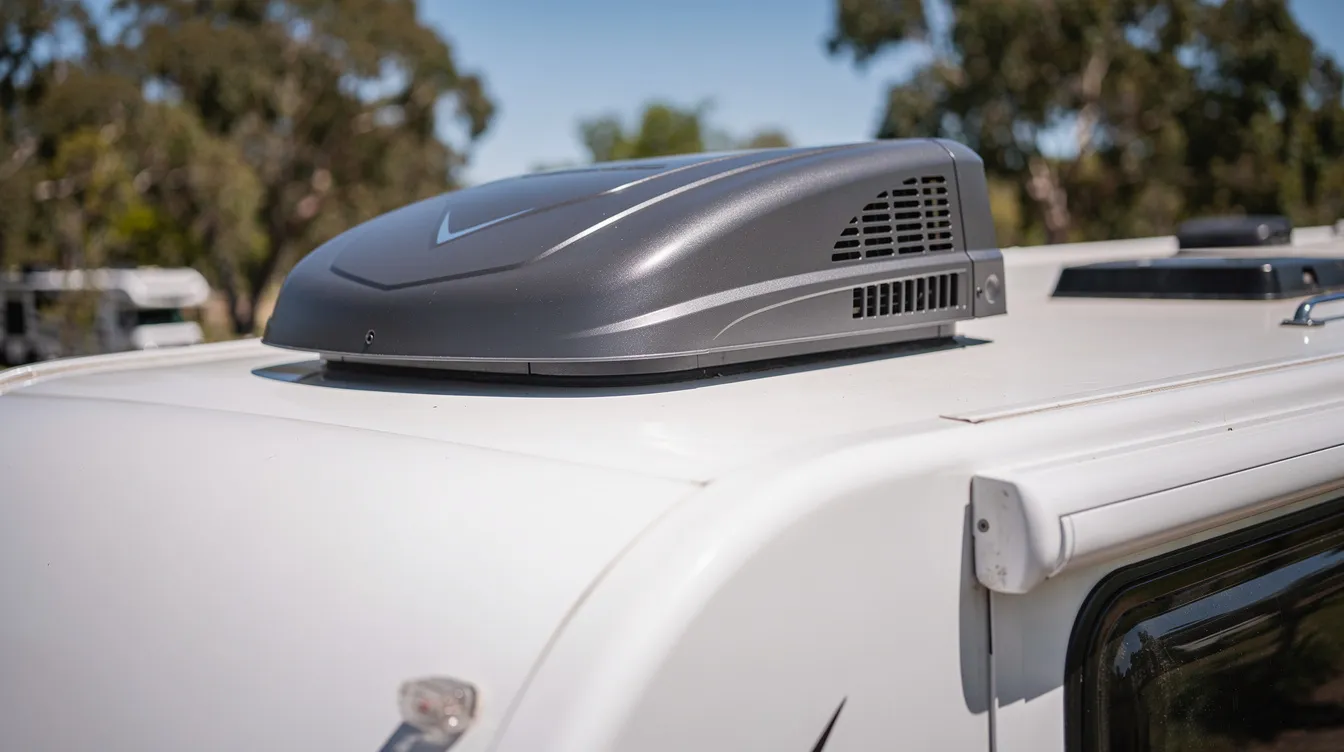
Loose wiring can cause circuit breakers to trip. Inside the rooftop AC shroud, loose wire lugs, overheated terminals, or rubbed-through insulation can create intermittent shorts or high resistance points. Loose or corroded wiring creates resistance and can trigger a trip even when the AC unit is otherwise healthy.
Only owners comfortable with electrical work should remove the shroud and inspect for burnt connections. If you see scorched wires, melted insulation, or smell burning, close the panel and call a qualified service tech immediately.
Soft Starters and Other Upgrades
Adding a soft starter to the AC unit can cut startup surge significantly. An EasyStart soft starter can reduce startup amps by 75%, allowing smoother operation on weaker shore power and smaller generators. Some owners have successfully run two rooftop ACs on a single 30-amp pedestal after installing soft start controllers.
A soft starter doesn’t fix bad wiring or a failing compressor. But it can dramatically reduce nuisance trips caused by momentary high inrush current-putting the startup amperage well within the breaker’s comfort zone and extending the life of both the compressor and the breaker.
Safe Troubleshooting Steps & When to Call a Professional
Safety and fire prevention come first. Breakers that keep tripping are warning signs-not minor annoyances. Repeated resets without finding the cause can result in damaged wiring, a fried air conditioner, or worse.
Step-by-Step Troubleshooting at the Campsite
Follow this sequence before calling anyone:
Turn the thermostat to OFF and let the system sit for 10–15 minutes so the breaker and compressor can cool down.
Unplug or switch off other high-draw appliances: microwave, toaster, electric water heater, space heater, induction cooktop. Switch your water heater to propane if available.
Inspect and reset the AC breaker once. If it immediately trips again with the AC still off, suspect a breaker or wiring fault. Do not keep resetting.
Turn the AC back on and observe. Does it trip at startup or after several minutes of running? Tripping at startup points to surge or capacitor issues. Tripping after running suggests overheating from restricted airflow or a component drawing too much current.
Check Shore Power and Cords
Verify that the shore power plug, adapter dogbones, and cord ends are not hot, discolored, or partially unplugged.
If possible, test a different pedestal at the campground to see if the problem follows the RV or the power source.
Try running briefly on a properly sized generator. If the AC runs fine on the generator but the breaker trips on shore power, you’ve confirmed a power source issue at the pedestal.
When to Stop and Call a Professional
These are clear “stop” conditions that require a pro:
The breaker trips immediately every time the AC is turned on, even with all other loads off and known good shore power. This often points to a short circuit or seized compressor.
You see or smell burning plastic, smoke, or melted insulation at the panel, shore power cord, or rooftop AC unit.
There’s a history of rodents or water intrusion in the RV roof or wiring areas, raising the risk of damaged conductors you can’t see.
The breaker won’t stay latched or feels physically broken when you try to handle it.
Choosing the Right Help
Contact a mobile RV technician in Marana, AZ or licensed electrician familiar with 30-amp and 50-amp RV systems for complex breaker, wiring, or compressor diagnostics.
Document when trips occur-time of day, outdoor temperature, other appliances running, whether on shore power or generator. This information helps a tech troubleshoot faster and saves you money.
With regular maintenance-filter changes, coil cleaning, proper shore power checks, and avoiding overload-most RV air conditioner breaker problems can be prevented before they ever happen on a trip. A little preparation goes a long way toward reliable performance and peace of mind all season long.
FAQ
These questions cover extra topics RV owners frequently ask about AC breakers, shore power, and safe operation that aren’t fully addressed in the main sections above.
Can I keep resetting my RV AC breaker if it trips only on the hottest days?
A single reset after allowing the breaker and AC to cool for 10–15 minutes is acceptable. But repeatedly resetting a breaker that continues to trip-especially on very hot afternoons-creates a serious risk of overheating wiring and damaging the air conditioner’s compressor.
Heat waves often coincide with low campground voltage because every rig in the park is running its AC simultaneously. Check shore power voltage with a meter or EMS device and reduce other loads before deciding whether to run the AC again. If the voltage is below 105 V, the safest choice is to keep the AC off until conditions improve.
Is it safe to run my RV air conditioner on a 15-amp household outlet with adapters?
While many people temporarily power an RV from a 15- or 20-amp home circuit, doing so with the air conditioner running is often marginal. A 15-amp circuit provides only about 1,800 watts-barely enough for the AC’s running draw and nowhere near enough to handle startup surge. The result is frequent nuisance breaker trips or dangerously hot plugs.
If you must run the AC at home, use a dedicated 20-amp circuit with a heavy-duty extension cord, monitor plug temperature closely, and avoid other large loads in the RV. Installing a soft starter can make this scenario more viable.
How do I know if the AC breaker itself is bad instead of the air conditioner?
Signs of a failing breaker include: it feels loose or won’t firmly latch in the ON position, it’s warm even with only a light load, or it trips instantly even when the AC unit is completely disconnected. A professional can measure current draw with a clamp meter to confirm whether the breaker is tripping below its rated amperage. If it is, the breaker needs to be replaced with one that matches the correct amp rating for your system.
Will installing a soft starter void my RV AC warranty?
Check your specific air conditioner manufacturer’s warranty terms and installation guidelines for your model year. Many modern rooftop AC units-including popular Coleman models-accept soft starters when installed according to the manufacturer’s wiring diagram. However, incorrect installation can cause damage and affect warranty coverage. When in doubt, have the install done by a certified RV technician who can document the work.
Why does my RV AC run fine on a generator but trip the breaker on shore power (or vice versa)?
The differences in voltage, surge capacity, and wiring between a generator and a campground pedestal can change how much current the AC unit draws at startup and during heavy load. A well-regulated generator may deliver a steady 120 V while a weak pedestal sags to 105 V, forcing the AC to pull higher amperage on shore power.
Conversely, a small generator may lack the surge capacity to start the compressor, causing trips that don’t happen on a robust 30-amp pedestal. Compare measured voltage under load in both situations and check for issues unique to one power source-undersized cords, corroded connections, or an underpowered generator that simply can’t deliver enough electricity for the startup demand.