
Key Takeaways
A 13,500 BTU unit suits most RVs up to about 32 feet, while larger rigs or those in hot climates need 15,000 BTU or a second ac unit.
Ducted systems deliver more even cooling and quieter operation across multiple vents, while non ducted units are simpler, cheaper, and ideal for smaller trailers.
Multi zone configurations let you cool only the spaces you’re using, saving power and reducing noise at night.
Inverter and heat pump rv air conditioner models cut noise levels and power draw significantly – a big advantage for boondocking or 30A hookups.
Matching your ac unit to your electrical system (30A vs 50A), maintaining filters and coils, and ensuring a proper roof seal are the keys to 10+ years of reliable cooling.
Introduction: What Makes an RV Air Conditioner Different?
An air conditioning unit for an RV isn’t just a shrunken version of what sits in your house. It has to be compact enough to fit a standard roof opening, vibration-resistant enough to survive highway travel, and compatible with 120V shore power, generators, and inverters. Choosing the right RV air conditioning unit depends on rig dimensions and power source – factors a residential system never has to consider.
Most standard RV rooftop units require a 14×14 inch roof opening, often replacing an existing vent cap. They typically deliver 13,500 or 15,000 BTU of cooling capacity in a single weatherproof housing that sits on the rv’s roof. Today, RV owners choose between single-zone rooftop air conditioners, multi zone ducted systems on fifth wheels and Class A motorhomes, and under-bench or split ac units found in many Class B campers and European-style vans.
This article walks you through every decision – which type of ac unit, what cooling capacity, and whether to go ducted or non ducted – so you can stay cool no matter where your vehicle takes you.
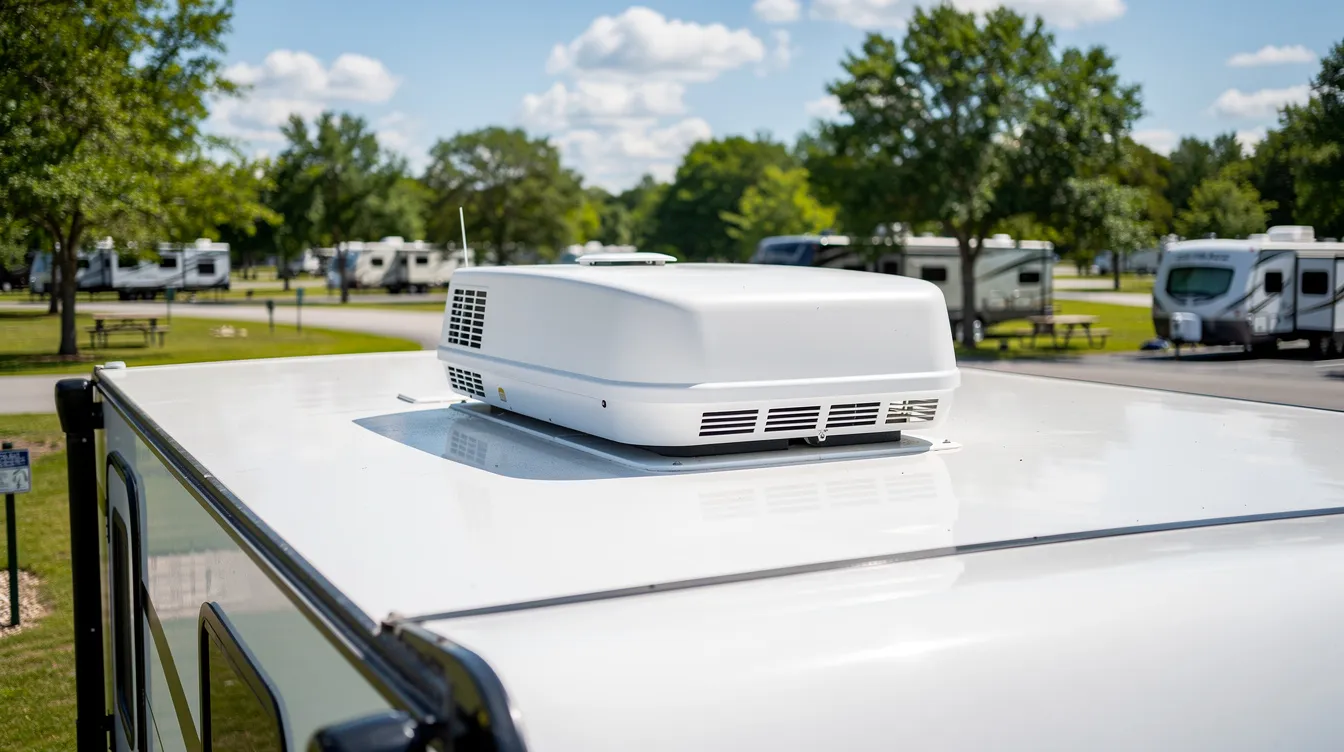
How an RV Air Conditioner Works (Core Components)
The refrigeration cycle is straightforward: refrigerant absorbs heat from the cabin air, carries it outside, dumps it, and cycles back. An rv air conditioner should cool air about 15–20°F cooler than the return air temperature – if it’s not hitting that range, something needs attention.
Refrigerant acts as the heat-transfer medium, repeatedly changing from liquid to gas and back within a sealed loop. Inside the unit, evaporator coils get cold as liquid refrigerant evaporates. A fan pulls warm cabin air across those coils, and the cooled air is pushed back into the room.
The compressor is the system’s pump. It pressurizes refrigerant vapor and drives it to the condenser coils on the roof, where an outdoor fan blows ambient air across the coils to dump heat. Variable-speed (inverter) compressors can reduce energy usage by ramping up and down instead of cycling full-on and full-off. The fan motor and blade design on both the indoor and outdoor sides strongly affect noise levels and cooling performance.
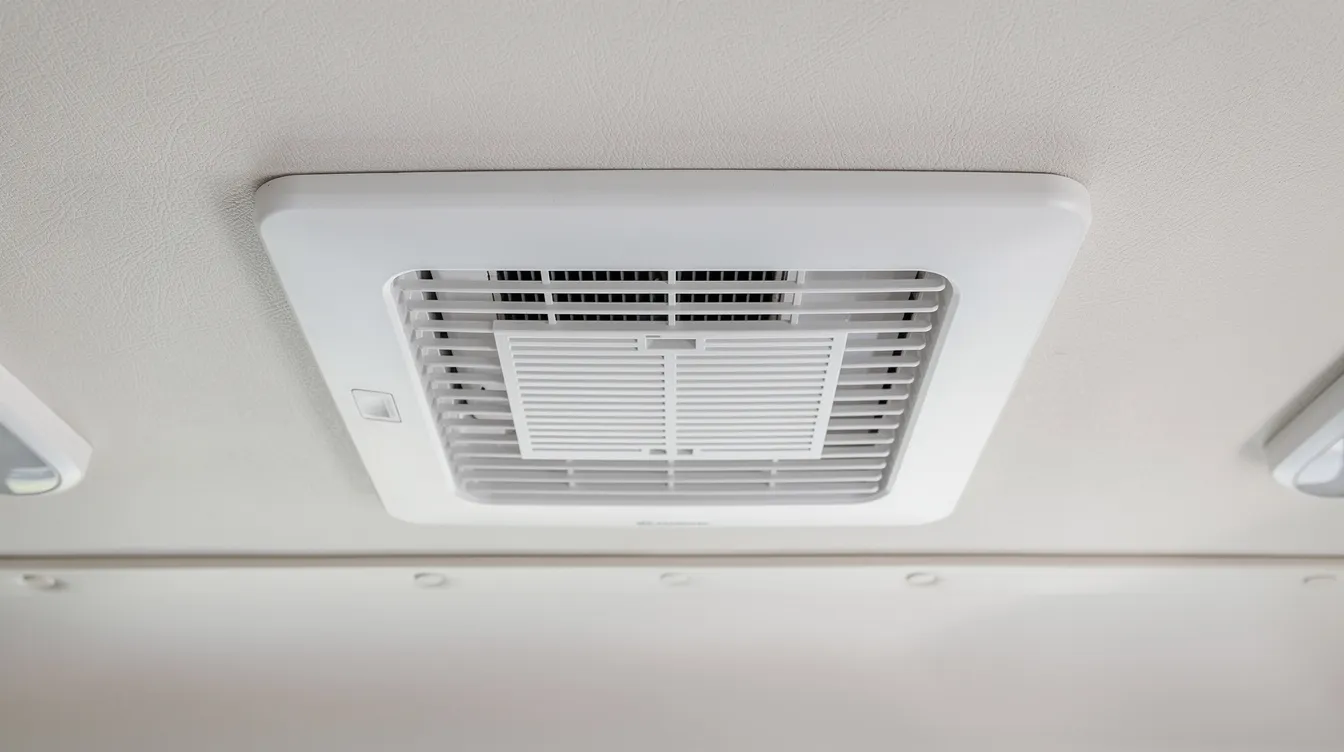
On non ducted systems, the air filter sits inside the air distribution box mounted in the RV ceiling. A dirty filter or blocked ADB grille chokes airflow and forces the compressor to work harder. The thermostat and controller regulate compressor cycles, fan speeds, and – in multi zone setups – which areas receive cool air.
Types of RV Air Conditioning Units
RV owners typically choose between rooftop air conditioners, under-bench or split systems, and portable units.
Rooftop units are the most common type of RV AC. They sit in the standard 14×14 inch roof opening and house the compressor, coils, and fans in one compact housing. You’ll find them on travel trailers, fifth wheels, and most motorhomes. Models like the Dometic Penguin II feature a low-profile design for reduced wind resistance, making them popular on rigs that see a lot of highway miles.
Ducted systems route cool air from a rooftop air conditioner through ceiling-mounted ductwork to multiple vents across a 30–45 ft coach. Ducted systems distribute air through ceiling-mounted ductwork, supporting separate climate zones in larger rigs.
Non ducted systems blow air directly into the RV cabin through an air distribution box with adjustable louvers. Non ducted units are common on RVs under about 28 feet with a single climate zone.
Under-bench or split systems place the compressor and condenser under the floor or in a rear locker, with an air handler inside. Under-bench systems are used in Class B vans and smaller rigs where roof space is limited.
Portable AC units are less efficient and rarely used in RVs. They take up floor space, require exhaust hoses, and struggle in high ambient temperatures. Consider them a stopgap, not a solution.
The type you choose should match your RV’s construction, your camping style, and your climate.
Sizing Your RV Air Conditioner: Cooling Capacity & BTU Rating
BTUs measure how much heat an AC unit removes per hour. Most RV air conditioners have a cooling capacity of 9,000 to 18,000 BTUs, with 13,500 BTU being the most popular size rv air conditioner on the market.
Here’s a quick reference to help you size your system:
RV Length | Climate | Recommended BTU |
|---|---|---|
Under 28 ft | Moderate | 9,000–13,500 |
28–32 ft | Moderate to warm | 13,500 |
30–35 ft | Warmer climates | 15,000 |
35–45 ft | Any | Two units (13,500–15,000 each) |
A 13,500 BTU unit suits RVs up to 32 feet in moderate climates. A 15,000 BTU unit is recommended for hot climates – the Coleman Mach 15, for instance, delivers exactly that cooling power. The Dometic FreshJet 3 is another model engineered to be compatible with demanding hot-climate use. For 15,000 to 18,000 BTU units, you’re looking at larger rigs or extreme heat. A 15,000 BTU unit cools RVs over 35 feet long, but RVs over 35 feet often require two air conditioning units for adequate coverage. |
Factors that push you toward higher btu rating include dark exterior colors, poor insulation, large single-pane windows, and frequent parking in full sun. Oversizing slightly is safer than undersizing in desert or Gulf Coast conditions, but extreme oversizing leads to short cycling and poor humidity control.
RVers who camp above 6,000 ft elevation may favor an energy efficient inverter-style ac unit with variable output rather than simply jumping to a larger fixed-size compressor.
Ducted vs Non-Ducted RV AC Systems
Whether you go ducted or non ducted is mainly about how cool air moves through the RV, not about the rooftop unit itself. The ceiling assembly determines the difference.
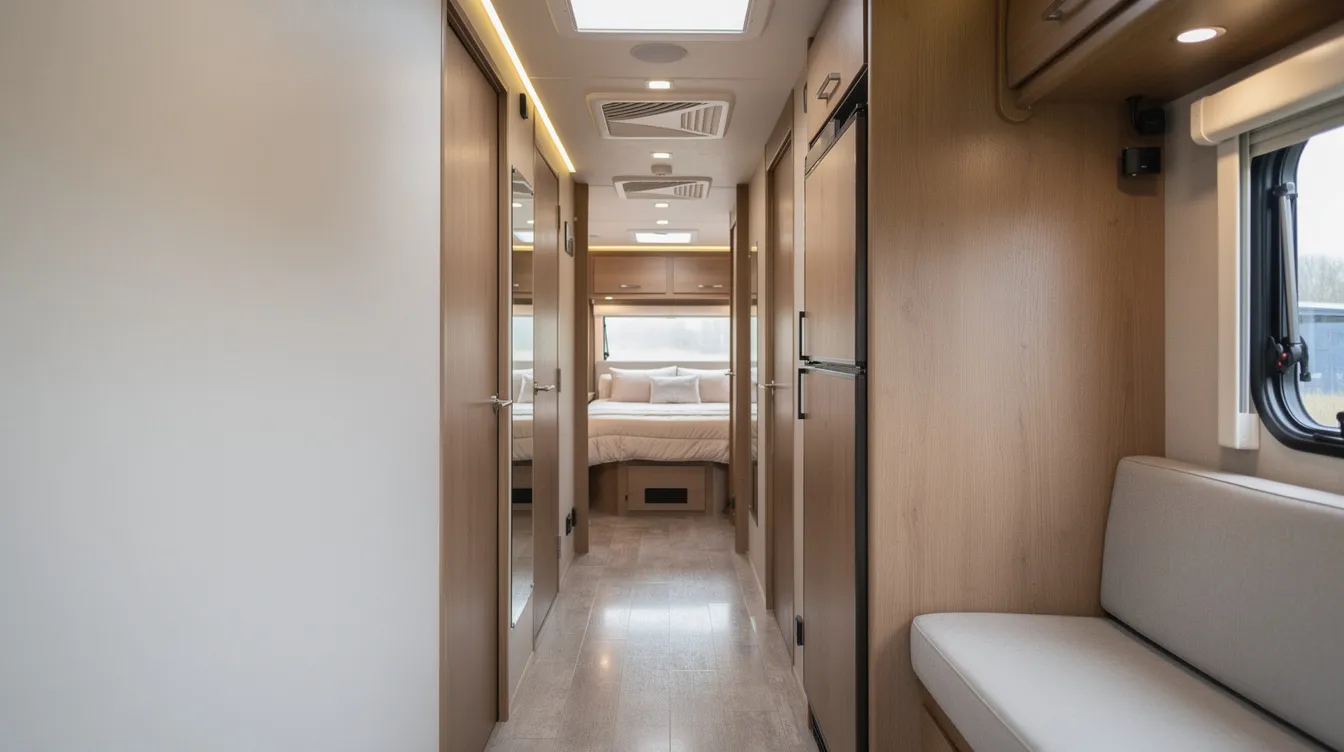
Ducted systems use ceiling-mounted ductwork for air distribution. A rooftop ac feeds air into insulated ducts that branch to vents in bedrooms, bathrooms, and living areas. Benefits include more even temperatures, quieter operation (ducted systems are quieter due to isolated fan components), and better support for multi zone cooling in larger RVs. You’ll find ducted systems on longer fifth wheels, bunkhouse travel trailers, and Class A motorhomes built after about 2010. Retrofitting ducts into an older trailer is usually impractical.
Non ducted systems blow air directly into one zone through the ADB, sometimes with directional louvers to push air toward a remote bedroom or kitchen. Non ducted systems are simpler and more affordable to install – fewer hidden duct leaks, lower cost, and easier filter access. They work well for smaller trailers and Class C motorhomes.
Noise-wise, non ducted units can be louder directly overhead, while ducted and non ducted systems differ mainly in how sound diffuses through the cabin. If you’re replacing an existing rv ac, match the new unit to your current configuration – ducted and non ducted parts are often not interchangeable without changing the ceiling assembly.
Single-Zone vs Multi Zone RV Air Conditioning
Zones are independently controlled areas – living room and bedroom, for example – each with its own thermostat settings. Larger RVs may need more than one air conditioning unit to manage separate zones effectively.
Single-zone systems are standard on compact RVs. One rooftop ac unit cools the entire interior, controlled by a single thermostat. Simple wiring, lower cost, one roof penetration.
Multi zone ducted systems appear on fifth wheels over about 35 feet and many late-model Class A motorhomes. Two rooftop units share a controller and deliver independently adjustable temperatures for front and rear zones. Ducted systems support multi-zone cooling in larger RVs, and some modern controllers handle up to three zones – including a garage or bunkroom area on toy haulers.
The comfort and energy efficiency benefit is real: keep the bedroom cooler at night while letting the living room drift warmer, reducing run time and noise where you’re not. Upgrading from single-zone to multi zone requires compatible control boards, harnesses, and wall thermostats – check your rig’s wiring before committing.
Power, Noise Levels & Heat Pump Options
Your rv air conditioner must match both available power sources and your expectations for quiet, year-round comfort.
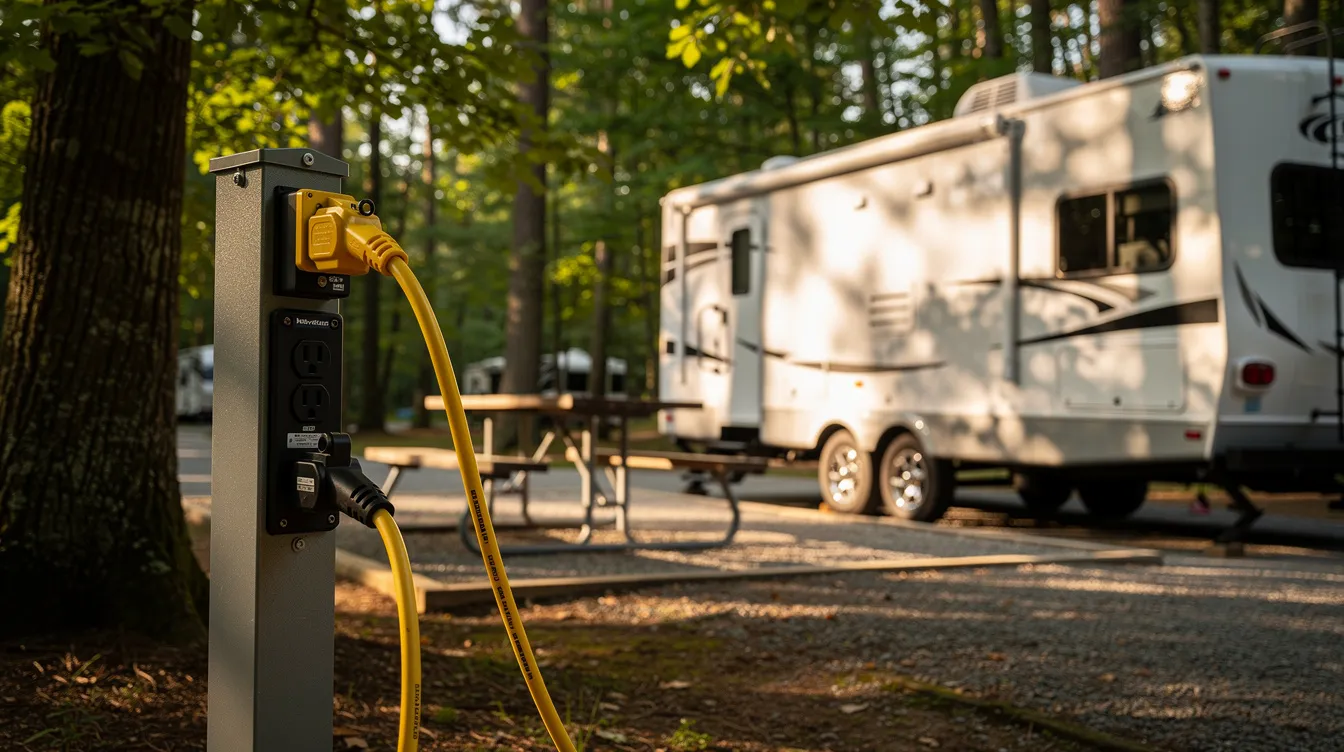
A single 13,500 or 15,000 BTU unit runs on 120V and fits on a 30A hookup (~3,600W). But traditional RV AC units pull high amperage when the compressor starts – often 3–5× the running draw. A soft start kit can reduce startup current by up to 75%, keeping breakers from tripping on smaller generators or 30A pedestals. RV air conditioners operate on 120V power sources, so ensure your inverter or generator delivers clean, stable AC voltage.
Running two rooftop units simultaneously almost always requires 50A shore power or a large generator. Energy management systems can stagger startups if your electrical system is borderline.
Modern RV AC units can have noise levels reduced to the 50-60 dB range, but newer inverter models push that lower. RecPro’s RV air conditioners operate as quietly as 43 decibels, and TURBRO offers one of the first inverter RV air conditioners on the market. Design factors that deliver quieter operation include variable-speed compressors, better fan blade profiles, insulated air distribution boxes, and ducted airflow with multiple vents instead of a single high-velocity outlet.
A heat pump rv air conditioner reverses the refrigerant flow to provide electric heat down to about 40–45°F outdoors, reducing reliance on propane furnaces during shoulder seasons. The trade-off: some heat pump models have slightly reduced cooling capacity due to the reversing valve, so extremely hot climate campers may prefer cooling-only rooftop ac units with maximum btu output.
Installation, Maintenance & Longevity of RV AC Units
Many handy RV owners can install a replacement rooftop air conditioner themselves, but it’s a high-voltage rooftop job – hire a professional if you’re unsure. Basic steps: remove the old shroud and unit, clean the 14×14 roof opening, replace the foam roof gasket, set the new ac unit, and torque interior bolts to spec to avoid leaks. On non ducted systems, the ceiling assembly or air distribution box can often be replaced independently.
Maintenance checklist:
Air filters should be cleaned or replaced monthly in heavy use (every 30–60 days minimum).
Rooftop coils should be vacuumed and cleaned at least once a year.
Inspect the rubber mounting gasket for compression and cracks at least once a year.
Check for restricted airflow – routine maintenance prevents restricted airflow and frozen coils.
Routine maintenance improves cooling performance and prevents expensive repairs. RV air conditioners typically last 10 to 15 years with maintenance, with typical failures involving a capacitor, fan motor, or control boards rather than the sealed compressor itself. Weak cooling is more often caused by dirty coils, restricted airflow, or low voltage than by refrigerant loss. Opening the sealed system should be left to an EPA-certified technician.
RV owners in coastal or dusty regions should maintain coils more frequently – salt and fine dust rapidly reduce heat transfer and increase compressor load. In hot, arid regions, working with a mobile RV repair service in Tucson, AZ can help you stay ahead of climate-related wear and tear on your AC system.
FAQ
Can I run my RV air conditioner while driving?
Many motorhomes run their roof ac from the onboard generator while driving, which is safe when the generator and wiring are properly maintained. Some modern DC-powered split systems run from a 12V or 24V battery bank via an inverter or dedicated DC compressor, offering cooling on the move without generators. Standard rooftop units are not designed to run directly from the vehicle alternator without an inverter – wiring them to 12V improperly can damage the unit and create safety hazards.
Is a portable air conditioner a good long-term solution for an RV?
Portable air conditioners can provide temporary relief in small campers without roof openings, but they take up floor space, need vent hoses, and struggle above about 90°F. They’re best for short-term use or situations where modifying the roof isn’t possible – not as a permanent replacement for a purpose-built rooftop or split system.
Do I need a heat pump if my RV already has a propane furnace?
A heat pump is optional but convenient. It lets you heat using campground electricity on cool nights, saving propane for colder weather below roughly 40°F. Heat pumps are especially attractive for snowbirds on long-term electric hookups. In very cold climates, the propane furnace remains essential because heat pump efficiency drops sharply near freezing.
How do I know if my RV can support a second AC unit?
Check your owner’s manual for a pre-wired second AC location, often labeled “AC Prep” at a bedroom ceiling panel. Your electrical system must handle the additional load – rigs with factory 50A service are usually wired for two units, while 30A trailers may need upgrades. Consult the manufacturer’s wiring diagram or a qualified RV technician before cutting a new roof opening.
What’s the difference between an inverter (variable-speed) RV AC and a traditional unit?
Inverter air conditioners use a variable-speed compressor that ramps up or down, while traditional units simply switch full-on and full-off. The result is lower average power draw, steadier temperatures, and noticeably reduced noise levels – especially at night. Inverter units cost more upfront but are a strong choice for RVers who rely on solar, lithium batteries, or small inverter generators and want the quietest possible operation.