If you’ve ever run your propane furnace through a chilly night only to wake up with an empty tank and a cold RV, you already know why so many owners are making the switch. RV heat pumps offer a smarter way to manage climate control on the road, combining heating and cooling in a single rooftop unit powered by electricity. In this guide, you’ll learn how they work, when they make sense, and how to choose one for your rig.
Key Takeaways
RV heat pumps provide both heating and cooling functions in one unit, using electricity to transfer heat rather than burning fuel. In mild weather, they can cut propane use by up to 50% or more, saving you money and reducing trips to refill propane during camping.
Modern RV heat pumps are typically built into rooftop air conditioners found on many 2015–2026 motorhome, fifth wheel, and travel trailer models from brands like Dometic and Coleman-Mach.
Heat pumps operate best when outside temperatures are above 40°F to 45°F. Below about 35–40°F (1–4°C), most RV owners switch to a propane furnace or a hybrid setup for reliable warmth.
Heat pumps can save propane by using electricity instead, making them especially valuable when you’re connected to shore power at a campground.
Shoppers can buy new units through an RV dealership, online retailers, or as an upgrade package when ordering a new RV type such as a Class A, Class C, fifth wheel, or travel trailer.
What Is an RV Heat Pump and How Does It Work?
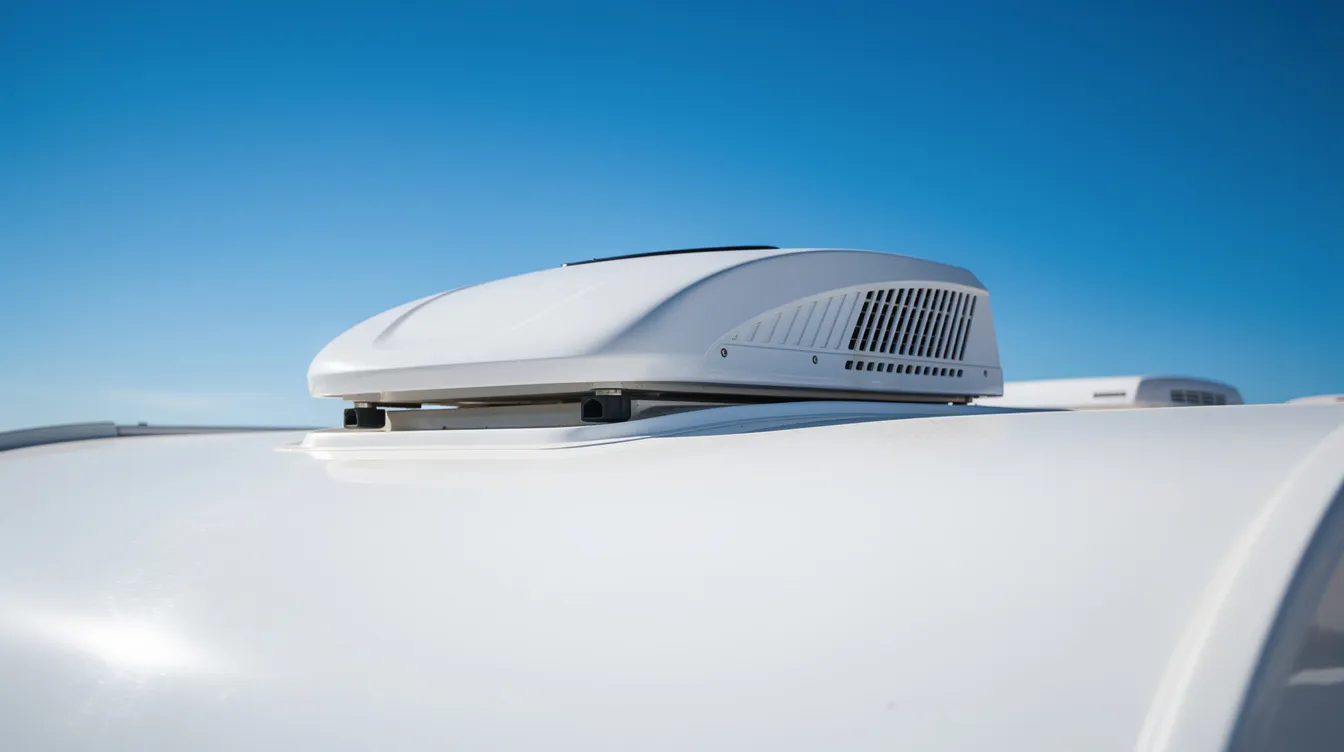
An RV heat pump is an electric climate system, usually rooftop-mounted, that can reverse refrigerant flow to provide both air conditioning and heat from a single unit. RV heat pumps function as dual-purpose air conditioning units – cooling your rig in summer and warming it in fall and spring without burning a drop of propane.
The Refrigeration Cycle in Reverse
In cooling mode, an RV heat pump works like any standard rooftop AC, pulling heat out of the cabin and dumping it outside. Switch to heat mode, and the system reverses. Heat pumps heat by moving heat from the outside air into the RV, even when it’s as cool as 40°F (4°C) outdoors.
Here’s the simplified process:
The outdoor coil absorbs ambient heat from the air (acting as an evaporator).
The compressor increases the temperature and pressure of the refrigerant gas.
The indoor coil releases that heat into your RV living space (acting as a condenser).
A reversing valve switches the refrigerant direction between heating and cooling modes.
Many units sold from around 2010 onward are “heat pump–ready” air conditioners from brands like Dometic and Coleman-Mach. These come standard or optional on mid- to high-end rigs, including Class A motorhomes – the largest RV type – as well as large fifth wheels that offer more living space than travel trailers. You’ll also find them on Class C motorhomes built on a truck chassis, travel trailers that are towable RVs attaching to vehicles, and even some toy haulers that have a garage space for transporting vehicles.
How It Feels Compared to a Propane Furnace
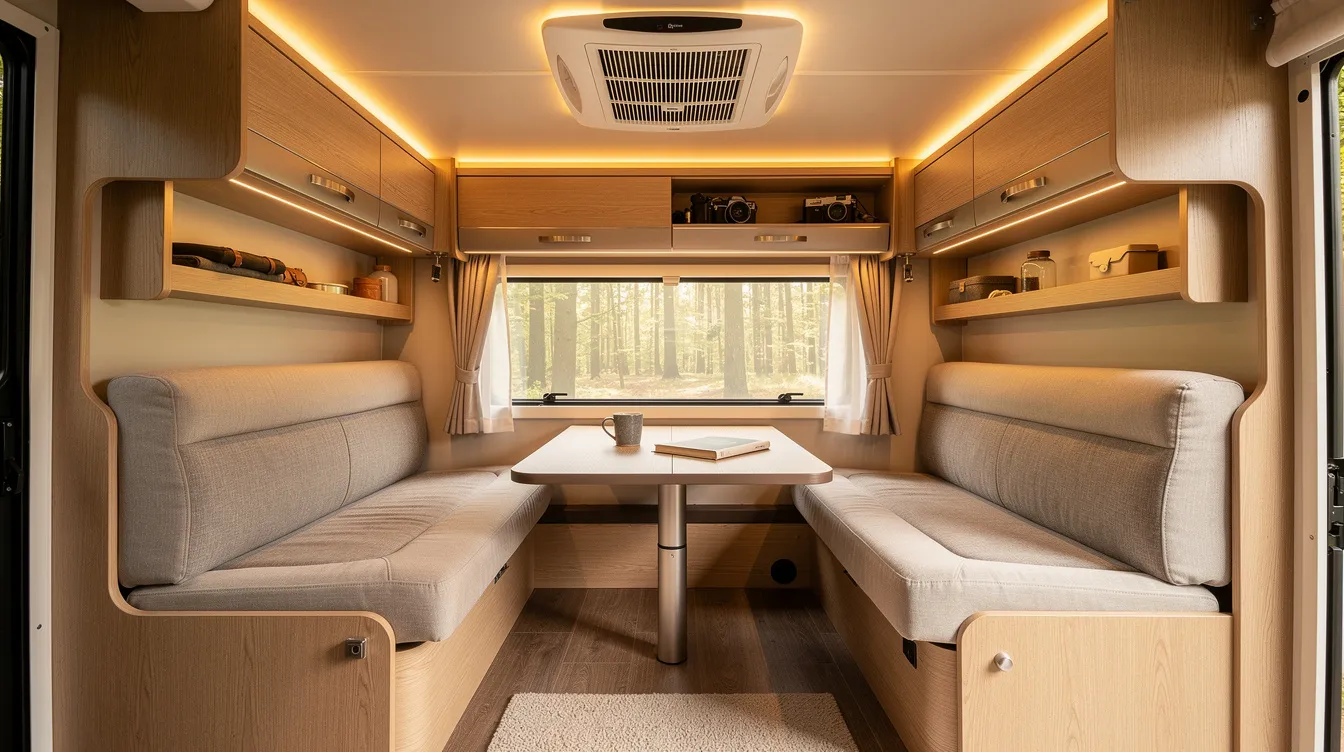
The air produced by heat pumps may feel less warm than air from a propane furnace, which blasts high-temperature air through your ducts. However, heat pumps operate quietly compared to propane furnaces and distribute warmth more evenly throughout the cabin. There are no combustion byproducts inside your living area, no burner flame to maintain, and no loud furnace cycling on and off at 3 a.m.
The trade-off is straightforward: a heat pump delivers steady, gentle warmth in moderate temperatures but loses its punch when the mercury drops below freezing.
Power Requirements and Safety
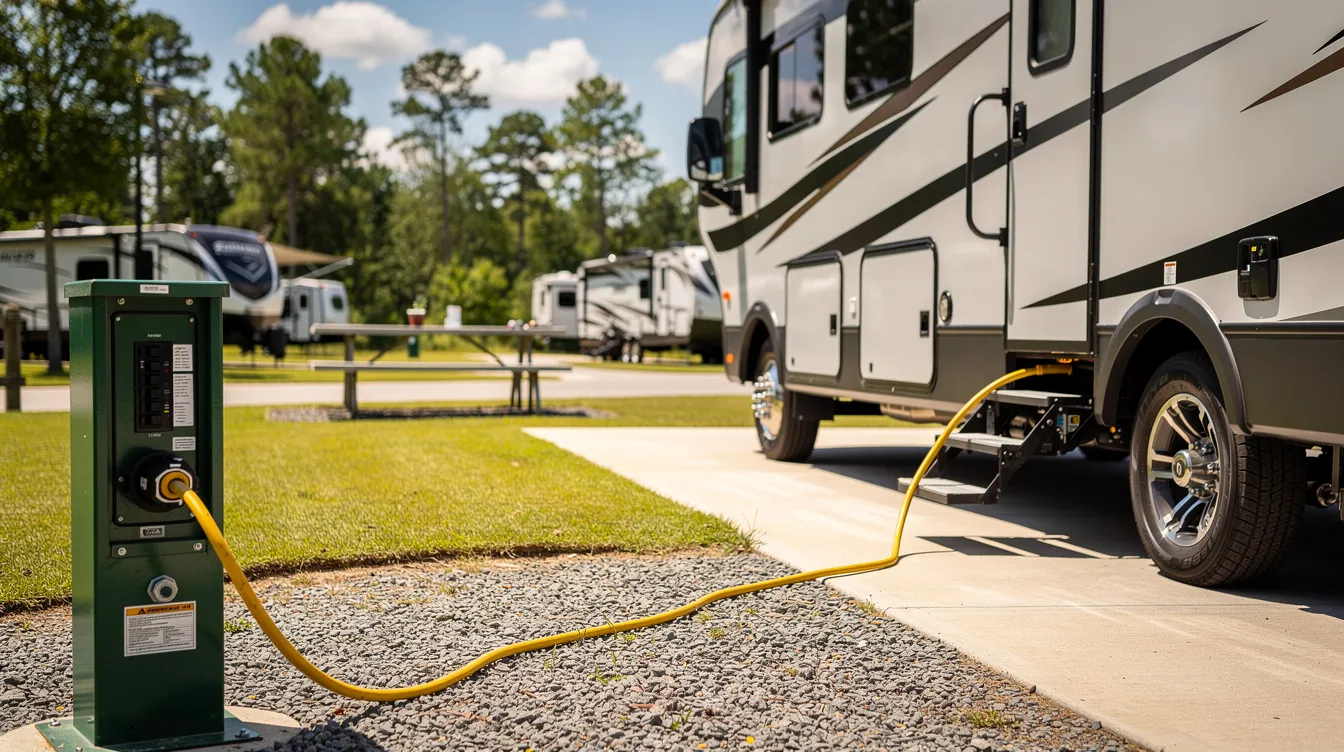
Heat pumps require shore power or a generator for operation, and they require significant electrical power to operate efficiently. A typical 15,000 BTU rooftop unit may draw 16–21 amps on a 120 VAC circuit. On a 30-amp shore service (roughly 3,600 watts total), running a heat pump alongside your kitchen appliances – microwave, electric water heater, or refrigerator – can push you right to the limit.
Safety tip: Use a properly wired pedestal and avoid overloaded adapters. Many smart surge protectors will display a request blocked or low-voltage warning when campground power is marginal. If your unit shows a configuration error or shuts down unexpectedly, that’s often a sign of brownout conditions – not an error with your heat pump itself. Think of it like visiting a website during too much traffic: the server can’t keep up, and the request gets denied. Check with the campground website owner or office to see if the electrical infrastructure can handle peak loads, and refer to your surge protector’s cloudfront documentation or manual (identifiable by a request id in the error log) to troubleshoot the issue.
Pros, Cons, and Best Uses for RV Heat Pumps
This section compares heat pumps to traditional propane furnaces and portable electric heaters for real-world RV travel from 2024–2026. The goal is to help you find the right fit for your setup and your road lifestyle.
Key Advantages
Reduced propane costs on hookups. Heat pumps are typically more energy-efficient than propane furnaces when temperatures are mild. NREL research on cold-climate heat pumps showed propane reliance dropped by 52–89% in homes using air-source heat pumps – and similar savings scale down to RV use in moderate climates.
More even, continuous heating. Rather than the blast-and-rest cycle of a furnace, heat pumps run steadily, keeping your cabin at a consistent temperature.
Dehumidification in shoulder seasons. The compressor naturally removes moisture from the air, which is important for preventing mold and mildew in your rig during spring and fall.
Cleaner operation. No combustion inside the living area means no exhaust routing, no carbon monoxide risk from the heater, and less maintenance on burner assemblies.
Using a heat pump can reduce trips to refill propane during camping, which is especially convenient for family adventures far from supply points.
Main Limitations
Reduced output in cold weather. Heat pumps lose efficiency in cold temperatures, requiring a propane furnace for freezing conditions. Below about 35°F, BTU output drops sharply, and the COP can fall below 2.0, making them more expensive to run than propane.
Heat pumps do not protect plumbing from freezing during cold weather. If you’re in sub-freezing conditions, you still need your furnace running to keep pipes and tanks from ice damage.
Dependence on electrical hookups. Without shore power or a generator, your heat pump is essentially decorative.
Noise from older units. While newer models are much quieter, some aging rooftop heat pumps can be disruptive, especially during defrost cycles.
Higher upfront price compared to a simple electric space heater or heat strip add-on.
Guidance by RV Type
RV Type | Heat Pump Suitability | Notes |
|---|---|---|
Class A motorhome | Excellent | Ample roof space, typically 50-amp service |
Fifth wheel | Excellent | Large living area benefits from even heating |
Class C motorhome | Good | Verify roof weight capacity and amp service |
Travel trailer | Good (mid-size+) | Smaller trailers may prefer mini-splits |
Camper van | Limited | Roof space and power constraints; consider alternatives |
Real-World Scenarios
Scenario 1: Wintering in Texas Hill Country. Overnight lows in the upper 30s to low 50s. A heat pump handles this comfortably on shore power, keeping your family warm without touching the propane. You’ll be satisfied with the performance and the savings.
Scenario 2: Boondocking in Colorado at 8,000 feet in January. Temps regularly dip below 10°F. Your heat pump won’t provide content warmth here – you’ll need a propane furnace as your primary heat source, with the heat pump serving as a supplement on warmer afternoons.
Scenario 3: Spring in the Pacific Northwest. Temps range from 40–55°F with high humidity. The heat pump excels, delivering gentle warmth while pulling moisture from the air to prevent that damp, clammy feeling inside your rig.
Campground Etiquette and Electrical Limits
Before you start your heat pump at a campground, check the park’s rules and understand the amp limits at your pedestal. On a 30-amp site, running a rooftop heat pump plus a microwave or hair dryer can trip the breaker – not just for you, but sometimes for neighboring sites sharing the same circuit. Reviewing the campground’s electrical layout and being mindful of traffic on shared circuits is part of being a considerate neighbor.
Selecting, Installing, and Maintaining an RV Heat Pump
Buyers today can choose factory-installed options on new rigs, dealer upgrades at the time of purchase, or aftermarket replacements for older rooftop AC units. Here are the steps to find the right unit and keep it running.
Choosing the Right Size and Style
Match the BTU rating to your rig’s size and insulation quality:
13,500 BTU: Suitable for smaller travel trailers and well-insulated Class C models
15,000 BTU: Standard for larger fifth wheels, Class A rigs, and poorly insulated older models
Confirm your rooftop cut-out size – most units fit the standard 14″ × 14″ opening. Then decide between ducted systems (which distribute air through ceiling or floor vents for even coverage) and non-ducted units (which blow directly from a central ceiling assembly).
Consider these factors when reviewing options:
Weight and profile height – important for aerodynamics when towing
Noise ratings (dB) – newer models like the Dometic Brisk II Evolution feature enhanced sound damping and 15% increased airflow over previous models
Smart thermostat compatibility – some units connect to a smartphone app for remote temperature control
Defrost controls – essential for performance in cool, humid climates
Buying Through Dealers or Online
Many RV dealerships in 2024–2026 sell heat pump add-ons when customers purchase new rigs. Ask about package pricing rather than paying for a separate install later – dealers often offer better terms when bundling with a new model. If you shop online, be prepared: popular units generated high demand during recent camping seasons, and some retailer websites experienced outages. If a site shows an error page, try again later or contact the seller directly.
Financial tip: Get pre-qualified for an RV loan before shopping. Pre-qualification helps determine your budget for an RV and ensures you know what you can spend on upgrades like heat pumps. Financing options vary based on credit score and loan terms, and many lenders offer RV loans with terms up to 20 years – giving you ways to spread the cost of a well-equipped rig.
Installation Process
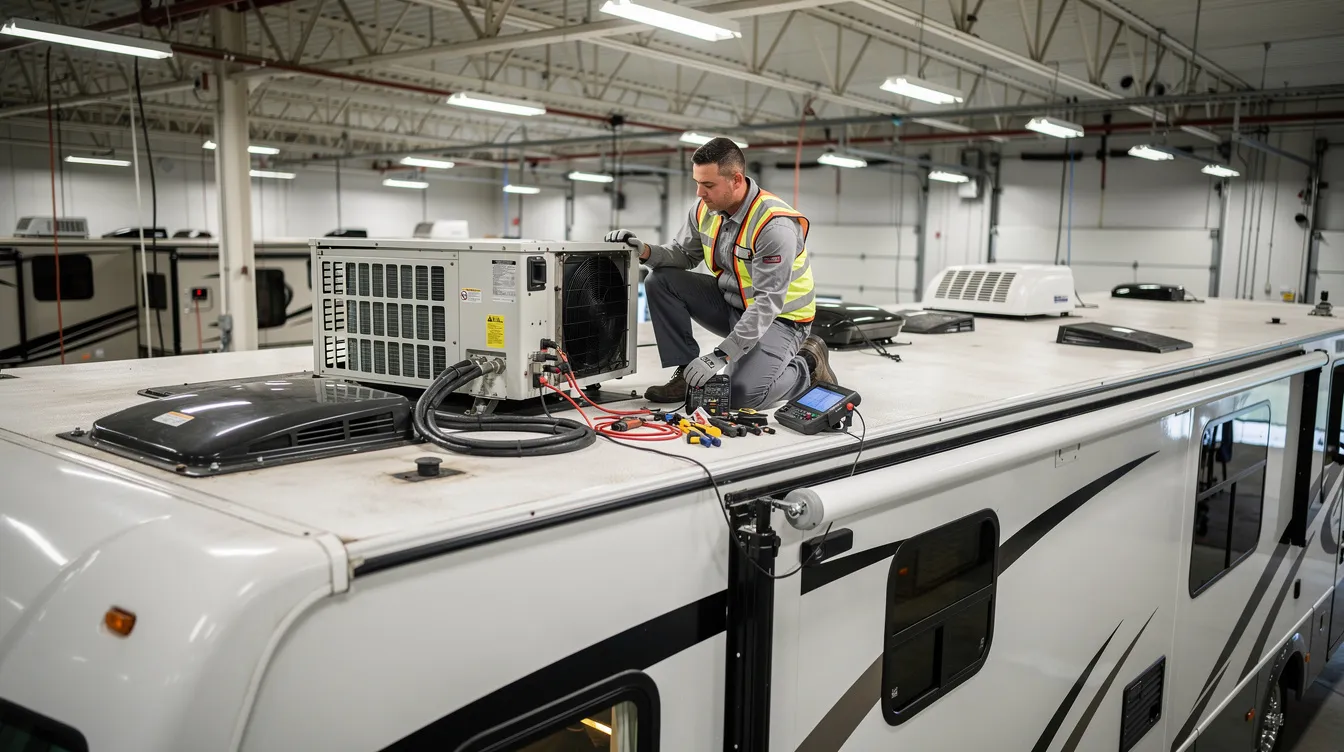
A certified RV HVAC technician can typically complete installation in half a day to a full day. If you’re based in southern Arizona, experienced mobile RV repair technicians in Tucson can often handle this on-site. Find steps below for what to expect:
Remove the old AC unit and inspect the roof structure
Seal the roof opening with proper flange gaskets to prevent water leaks
Mount and secure the new heat pump unit
Wire to the thermostat and breaker panel, verifying proper circuit sizing
Install interior ceiling assembly or duct connections
Test both cooling and heat modes, verify refrigerant charge
Install a soft-start device if needed to reduce inrush current on startup
Ongoing Maintenance
Routine maintenance keeps your RV in optimal condition – and that applies to your heat pump just as much as your engine or tires. Here’s a basic schedule:
Task | Frequency |
|---|---|
Clean or replace interior air filters | Monthly during heavy use |
Inspect and reseal roof gaskets | Annually |
Clean exterior coils and shroud | Every season or as needed |
Check defrost function | Before each cold-weather trip |
Professional compressor and refrigerant check | Every 2–3 years or if issues arise |
Regular inspections can prevent costly repairs later. If your unit short-cycles, blows lukewarm air, or makes unusual sounds, contact a qualified RV service technician. Expert service is available for any RV issues at most dealers and mobile repair services, including mobile RV repair services in Tucson, AZ and nearby mobile RV repair in Marana, AZ. |
Don’t neglect the rest of your rig while focusing on climate control. Check tire pressure monthly for safety and performance, and change RV oil every 3,000 to 5,000 miles to keep everything running smoothly on the road.
Protect your investment: Add a surge protector or electrical management system (EMS) at the shore power pedestal. These devices prevent compressor damage from low voltage, spikes, and the brownout conditions that are common in busy summer campgrounds when electrical traffic spikes.
FAQ
Below are common questions about RV heat pumps that weren’t fully covered above. Each answer gives you the quick information you need to make a confident decision.
Can an RV Heat Pump Replace My Propane Furnace Completely?
In most of North America, treat your heat pump as a supplement rather than a full replacement. Performance drops sharply below about 35°F, and you’ll still need furnace heat for very cold nights. Full-time owners in the Sun Belt may go weeks without touching propane, but anyone who camps in four-season climates should keep their furnace in working order. The two systems complement each other well – the heat pump handles mild conditions efficiently while the furnace takes over when things get truly cold.
Do RV Heat Pumps Work When I’m Boondocking?
They can, but only with a substantial power setup. Heat pumps require 120V AC power, so off-grid operation demands either a large generator or a robust inverter paired with a lithium battery bank and solar array sized for high, sustained loads. For context, a 15,000 BTU unit drawing 16–20 amps continuously would drain most standard battery setups in a few hours. If you’re a serious boondocker, this is an important factor to weigh before you invest time and money in a heat pump as your primary heat source off-grid.
Is a Mini-Split Better Than a Rooftop RV Heat Pump?
Mini-splits can be quieter and more efficient, especially inverter-driven models that modulate output. However, installation is custom work – often involving exterior wall penetrations and refrigerant line routing – which can affect resale value and may be harder to service on the road. Standard rooftop RV heat pump units are available at most service centers and RV dealerships nationwide, making parts and repairs far more accessible. If you sell or trade your rig down the line, buyers and dealers tend to prefer factory-standard rooftop systems over custom installs.
How Long Does an RV Heat Pump Usually Last?
Many rooftop RV heat pumps last around 8–12 years with regular maintenance. Lifespan depends on climate, usage hours, and how well roof seals and electrical supply are maintained. Units in hot, dusty climates or those running near-constantly for full-time living may fall on the shorter end. Keeping filters clean, coils clear, and gaskets sealed are the simplest ways to extend your unit’s life and keep customers – and owners – of used rigs happy with their purchase for years to come.
What Should I Do If My Heat Pump Stops Heating Effectively?
Start by checking the basics: clean the air filter, clear debris from the outdoor coil, and verify that your thermostat is set correctly. If the unit is short-cycling or blowing cool air in heat mode, the issue could be low refrigerant, a failed reversing valve, or a worn compressor. Don’t try to troubleshoot refrigerant issues yourself – these require a certified technician with proper tools and EPA certification. Also, check your shore power voltage with a multimeter or EMS; delivered voltage below 105V can cause the compressor to struggle or shut down entirely, which many owners mistake for a unit failure when it’s actually a campground power problem.