Whether your family just bought a first camper or you’ve been full-timing for a decade, every travel trailer eventually needs attention. This guide covers the most common repairs, explains when to call mobile technicians versus visiting an rv repair shop, and walks through the inspections, upgrades, and safety checks that keep your rig road-ready season after season.
Key Takeaways
Most travel trailer repair issues-roof leaks, electrical faults, appliance failures, and brake wear-can be handled either by a mobile rv repair service that comes to your location or at a traditional rv repair shop. Mobile service saves towing costs and waiting time, while a shop is better suited for major repairs like full roof replacement or frame work.
Regular rv inspections and preventative rv service, especially on the roof, seals, brakes, and tires, prevent costly trailer repair down the road. Routine care significantly reduces expensive repairs in travel trailers and keeps them safe for every trip.
Complex rv repairs involving electrical, propane, or structural systems should be handled by certified technicians-ideally rvia master certified or RVTAA-credentialed pros-for safety, insurance, and warranty protection.
Mobile rv and mobile technicians can come directly to a campsite, driveway, or storage lot, eliminating the inconvenience of towing your rig to a dealership and spending weeks waiting for a spot.
Create a simple annual maintenance and inspection schedule with specific dates-for example, every March and October-so your travel trailer is always ready for the new season.
Understanding Travel Trailer Repair Basics
A travel trailer is a towable RV without its own engine, which means its repair needs differ from motorhomes. Instead of worrying about drivetrains and transmissions, you’re focused on four core areas: chassis and running gear (axles, suspension, brakes), body and structure (roof, walls, slide outs), house systems (electrical, plumbing, climate control), and appliances. Common travel trailer repair issues often stem from road vibrations and weather exposure over time.
The most common repairs include roof and seal leaks caused by dried and cracked caulking on seams and vents, electrical issues like blown fuses and dead outlets, plumbing repairs from loosened PEX fittings, slide-out malfunctions, brake and bearing wear, and appliance failures. Common travel trailer repairs also include battery and generator failures, plus RV appliances often require repairs for refrigerators and water heaters. These common repairs generally fall into three categories: emergency fixes (brake failure mid-trip), safety-critical systems (brakes, tires, LP gas), and comfort systems (AC, furnace, water heater).
A mobile rv repair service handles most of these jobs on-site, while a brick-and-mortar repair shop is better for structural or welding work, and services like RV Repair Hero’s mobile RV repair in Tucson, AZ show how convenient on-site repairs can be for many common issues. Using certified technicians-techs who hold credentials from the RV Technical Institute-helps protect manufacturer warranties, meets insurance requirements, and ensures the process follows industry standards.
Mobile RV Repair vs. Traditional RV Repair Shops
The key difference is simple: mobile rv repair brings a certified technician to your travel trailer at any location-campground, storage lot, or driveway-while an rv repair shop requires towing or driving the trailer in. Mobile RV repair services come to your location, and technicians can service RVs within a 100-mile radius of their base.
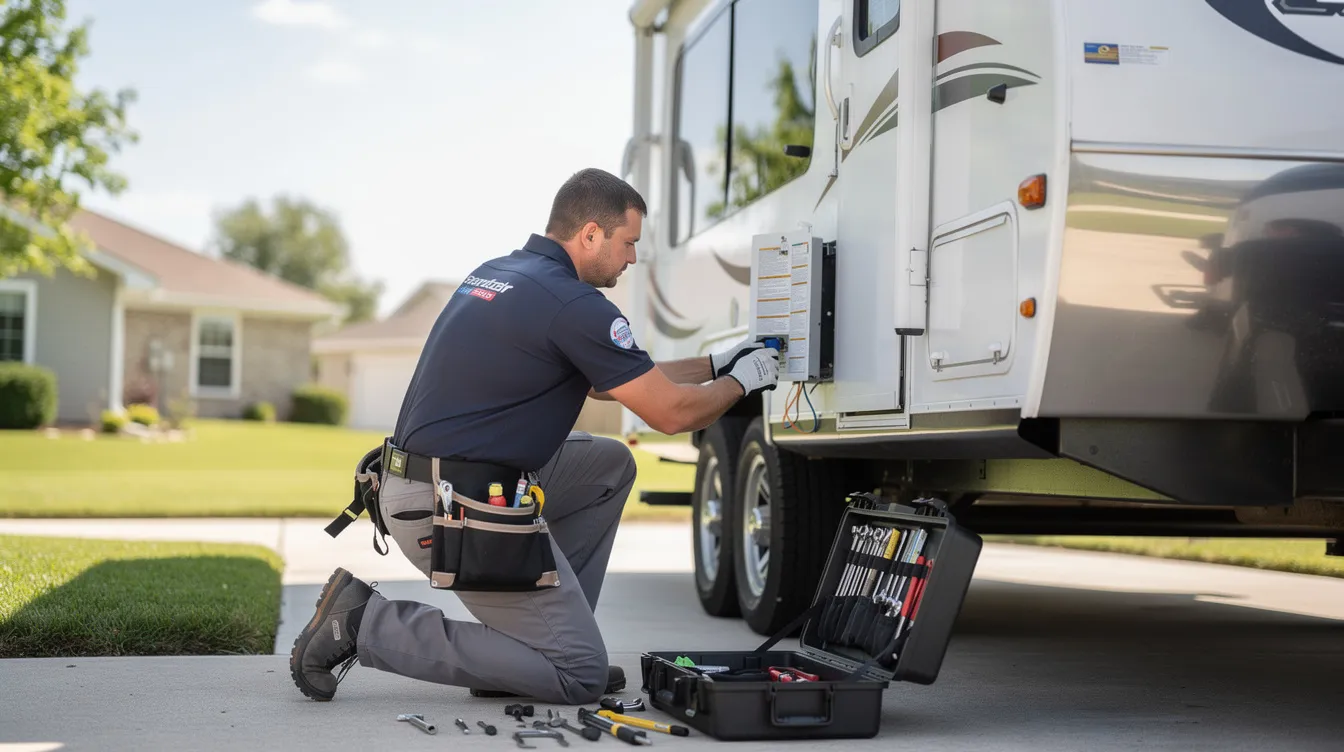
Consider real scenarios: fixing a leaking water heater at a Colorado state park, replacing a failed converter at a campsite, or troubleshooting a slide-out at a Texas Hill Country RV resort. Mobile RV repair includes emergency and routine maintenance, and mobile RV repair can handle emergency repairs on-site. Mobile RV repairs can be completed at your location, saving time. Mobile RV repair eliminates the need for towing to a shop, and mobile services avoid the inconvenience of towing your RV. Many providers offer mobile service across the US and even into parts of Canada.
However, a dedicated shop is still the better choice for full roof replacement on a 2018 Jayco Jay Flight ($6,000–$14,000 for membrane alone), significant collision damage requiring body work and frame straightening, or complete interior rebuild after long-term water intrusion. Some companies operate both ways-mobile technicians handle most rv service and inspections within a 50–100 mile radius, while a central shop handles large structural jobs and insurance work.
Cost-wise, mobile rv repair hourly rates are often similar to a shop’s, but you save on fuel, towing, and the fee for lost vacation time. Shops with certified technicians often ensure standardized training and expertise, so either option delivers professional results when you choose qualified providers.
Core Travel Trailer Systems and Common Repairs
A travel trailer is essentially a small house on wheels. Understanding each system helps you describe problems clearly when you contact a technician.
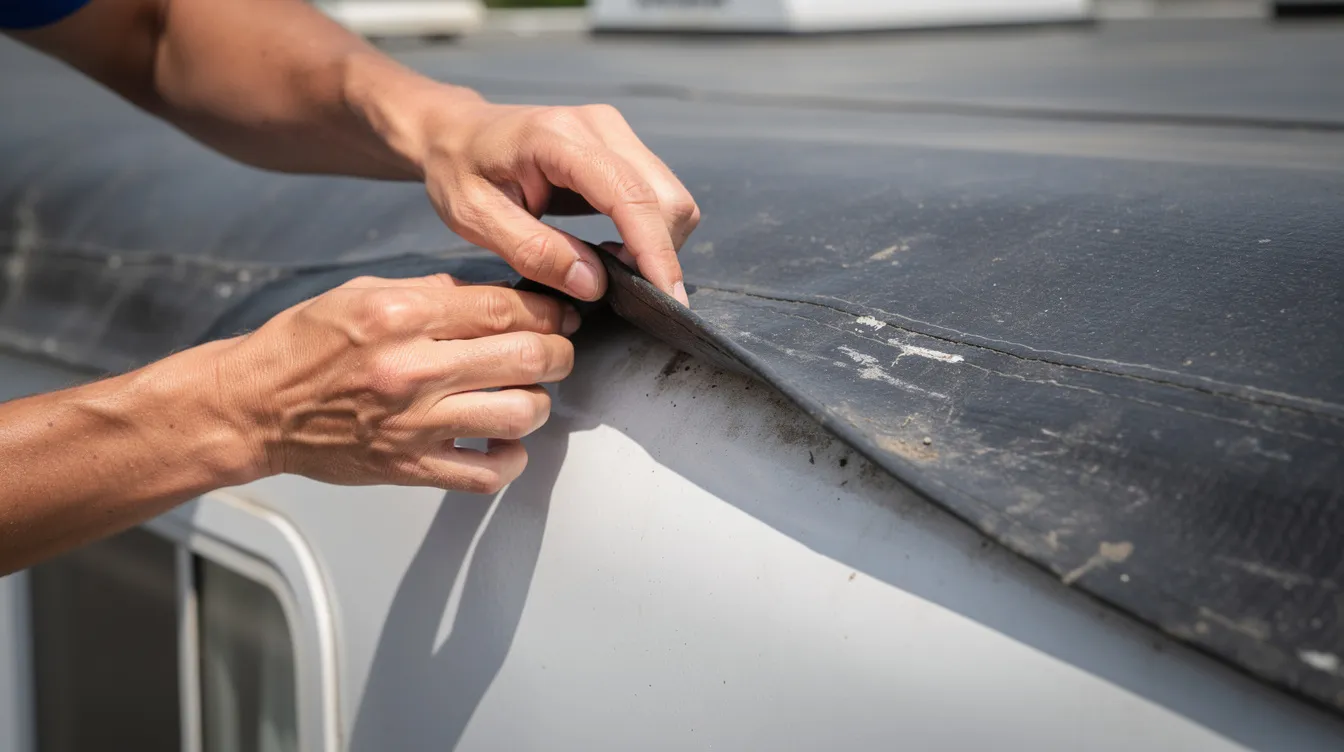
Roof and exterior: Annual roof inspections prevent leaks and costly repairs. Reseal your rv’s roof seams every 12–24 months, patch punctures from low tree branches, repair soft spots above the bedroom, and replace cracked vents or skylights. Damaged awnings from a spring windstorm also fall into this category.
Electrical: Electrical issues can arise from dead batteries or faulty inverters. Battery failure occurs when batteries are left connected during storage without a maintenance system. All 120V AC and LP gas work should be left to a professional for safety.
Plumbing: PEX tubing fittings can loosen from transit vibrations, causing plumbing leaks under sinks and behind walls. Inspecting plumbing systems prevents leaks and water damage. Improper winterization leads to freeze-damage-proper winterizing each fall is essential.
HVAC and appliances: Furnaces and water heaters need regular checks for efficiency. A roof AC unit unable to cool in July heat, a furnace failing to ignite in November, or a refrigerator not cooling when out of level are all frequent calls.
Running gear and safety: Travel trailers need brake and axle servicing yearly for safety. Repacking wheel bearings should be done annually to prevent failures. Tire rubber degrades over time, requiring non-tread-based replacements every 5–7 years, and proper tire pressure and timely replacements can prevent blowouts.
Interior: Soft floor sections near the entry door, delaminated wall panels, and warped cabinet doors from humidity round out the most common repairs owners face. Slide-out malfunctions can result from debris jamming the tracks, so inspect and clean them regularly.
Inspections, Preventative RV Service, and Safety Checks
Regular rv inspections and routine maintenance are the most cost-effective investment you can make. Routine inspections and maintenance can minimize travel trailer repair issues before they spiral into expensive emergencies. Regular maintenance can save thousands in unexpected repair costs.
A thorough RV inspection includes over 100 checklist points: roof membranes and sealant, wall seams, slide-out seals, underbelly condition, frame rust, axle welds, brake wiring, breakaway switch function, and propane leak checks. Inspections check for signs of leaks, electrical issues, and plumbing problems throughout the rig.
Pre-purchase inspections help identify issues before buying an RV-on a used 2019 Keystone Passport, for example, hidden water damage could cost $2,000–$15,000 to fix. Pre-trip inspections before a long run from Colorado to Florida catch different problems than annual roof and seal checks each spring. Travel trailers should have brakes and axles serviced yearly, ideally on a set schedule.
Many mobile rv services offer scheduled inspections at your home or storage site, making it convenient to catch slow roof leaks, corroded battery cables, or sagging axles early, and local options such as mobile RV repair in Marana, AZ provide this kind of on-site service for area RV owners. Regular inspections can extend your RV’s lifespan significantly.
Safety-critical items that should never be skipped: LP detector and smoke alarm testing, fire extinguisher condition, emergency exit windows, torque checks on lug nuts, and verifying correct brake controller operation. Keep dated records-“brakes and bearings serviced May 2026”-since documentation supports warranty claims, resale value, and any future insurance company claim.
Upgrades and Modernizations for Travel Trailers
Repair visits are the perfect time to add upgrades that improve comfort, boondocking capability, and security-especially on RVs built before 2018. Think of each upgrade as an investment in the future of your camper.
Popular electrical upgrades include converting from lead-acid to lithium batteries (3,000–5,000 cycle life versus 300–500), installing a 2,000W pure-sine inverter for reliable power, adding 400W of rooftop solar to a 2017 Lance travel trailer, and upgrading to smart battery monitoring systems. The cost of lithium batteries has dropped dramatically, making larger battery banks affordable even for mid-range rigs.
Comfort and convenience upgrades: electric stabilizer jacks as a replacement for manual ones, backup cameras on longer trailers, Wi-Fi boosters for remote work, and higher-BTU ducted air conditioners. Structural protection upgrades like shock absorbers, upgraded equalizers for smoother towing, rock guards, and ceramic coatings protect your rig on gravel roads. Interior refreshes-LED lighting, higher-CFM exhaust fans, residential faucets-can all be covered during a single service appointment.
Rvia master certified or similarly qualified technicians should handle any upgrade tied into LP gas, 120V electrical, or complex electronics to ensure code compliance and protect insurance coverage. Plan upgrades during slower seasons (January–March) since many rv repair shops and mobile technicians from rv dealers have more availability than during peak summer months. Manufacturers are also increasingly shipping RVs with solar and lithium pre-wired, making aftermarket upgrades simpler than ever.
Choosing the Right RV Repair Partner and When to Call Mobile Service
Picking the right repair partner-whether mobile rv specialists, a local trailer repair shop, or a combination-can mean the difference between losing a whole vacation week and being back on the road in a day.
Look for clearly stated service areas (within 75–100 miles), transparent labor rates, proof of insurance, and technicians who are at least RVIA or RVTAA certified. Verifying reviews on repair quality is essential when selecting a shop. When browsing rv service websites to find providers, you may encounter a page performing security verification to filter out malicious bots-a security service that verifies legitimate visitors. Once verification successful and the respond ray id confirms your connection, the site loads and you can access scheduling tools and contact forms. This bot-filtering process is standard across modern websites.
Call mobile technicians when you’re stuck at a campground with a failed slide-out, have a roof leak mid-storm, or a refrigerator fails during a family summer trip, and consider regional specialists like mobile RV repair services in Tucson, AZ if you’re traveling through southern Arizona. Plan a shop visit instead for major collision damage, full roof replacement, frame or axle replacement, or extensive interior rebuild. Some providers offer mobile service across both the US and Canada.
When you schedule, provide your trailer’s year, make, model, VIN, photos of the problem area, and a list of recent work with dates. Build an ongoing relationship with one trusted company so they know the history of your travel trailer and can spot patterns early.
Frequently Asked Questions
Below are practical questions about travel trailer repair that go beyond what we covered above, addressing specifics that owners frequently ask.
How often should I service the brakes and wheel bearings on my travel trailer?
For most tandem-axle travel trailers used regularly, inspect and service brakes and bearings at least every 12 months or 12,000 miles, whichever comes first. Heavier usage-cross-country trips, mountain towing-calls for more frequent checks. Many mobile rv repair providers can perform bearing repacks, brake adjustments, and hub inspections on-site in a driveway or storage lot, reducing downtime.
Can mobile RV repair handle warranty work on newer trailers?
Many mobile technicians are authorized to perform warranty work for specific manufacturers or component brands like Dometic, Lippert, or Suburban, but always confirm coverage with the trailer manufacturer first. All mobile RV technicians are rvia master certified, which helps protect warranty validity and provides professional documentation of each repair.
What emergency supplies should I keep on board for minor repairs?
Keep spare fuses, an extra water hose and pressure regulator, electrical adapters, a basic tools kit, tire pressure gauge, torque wrench, duct tape, self-leveling roof sealant compatible with your roof material, and a small selection of PEX fittings. These supplies help you fix small problems temporarily, but structural, electrical, and LP gas issues should still be handled by qualified technicians as soon as possible.
Is it safe to tow my travel trailer if I suspect a roof leak?
Minor leaks may not prevent towing, but significant water intrusion can indicate structural weakening or hidden rot. The safest choice is to have a technician inspect the roof, wall seams, and interior framing before long-distance travel. Use temporary measures-a properly applied roof patch or tape-only until a permanent repair can be completed by a professional.