When something breaks on your rig mid-trip, the last thing you want is to spend days waiting at a crowded service center. Mobile RV repair services bring skilled, certified technicians directly to your location so you can get back on the road fast.
Key Takeaways
Mobile RV repair services involve certified technicians traveling to your campsite, driveway, or storage lot – eliminating the need for towing to a busy repair shop and saving you days of waiting for rv repairs.
Modern mobile RV service can handle most common issues on-site, including electrical system troubleshooting, plumbing, appliances, slide-outs, and leveling system diagnostics.
Many mobile technicians offer rv inspections – pre-trip, pre-purchase, and yearly inspections – helping every rv owner prevent breakdowns before long trips in 2026 and beyond.
Before you schedule, vet your mobile RV repair pro by checking certifications (RVIA Master Certified technicians demonstrate high standards), Google reviews, service radius, and pricing structure.
Mobile RV repair is often faster, more convenient, and comparable in cost to traditional repair shop service, especially for travelers and full-timers who can’t afford the hassle of relocating a large camper.
What Is Mobile RV Repair and Why It Matters in 2026
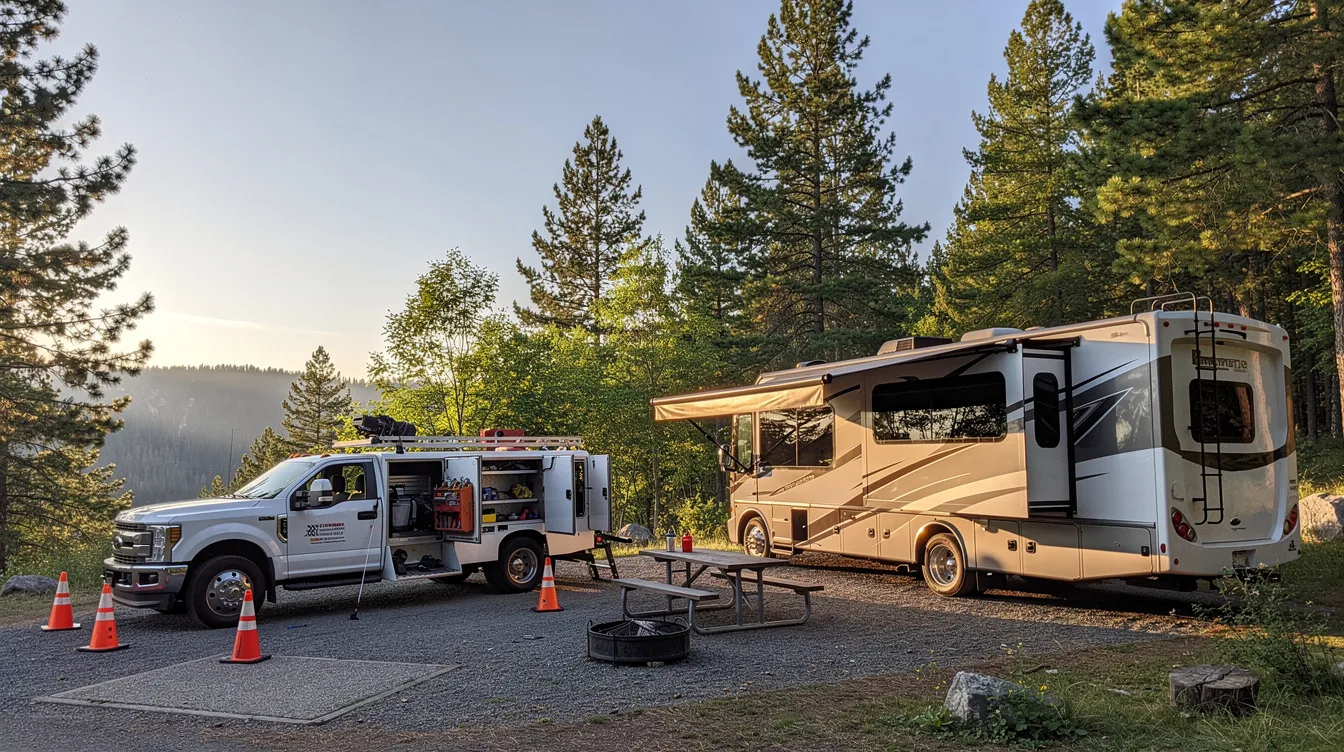
Mobile RV repair is a repair service where the mobile technician brings the shop to you – at your rv park, home, campsite, or roadside – rather than you driving to a fixed location. Mobile RV repair technicians are available across the U.S. and Canada, and some mobile RV services operate within a 100-mile radius of their home base, covering regional hubs, nearby campgrounds, and popular interstate corridors.
The biggest benefit is simple: mobile RV repair eliminates the need for towing to a shop and can handle emergency situations on-site. Mobile RV technicians often provide convenient service at campgrounds or homes, meaning minimal disruption to your trip or full-time living situation. Mobile RV services can save days of waiting for repairs compared to traditional rv repair shops, where dealer backlogs during peak travel season can stretch two weeks or more. Moving a class a motorhome or diesel pushers through city traffic just to reach a service center adds stress and money nobody needs.
Who benefits most in 2026:
Cross-country travelers far from any shop
Remote workers living full-time out of their rv
Retirees settled in long-term sites
Families on limited vacation time who can’t waste a day on towing
Mobile rv technicians commonly handle non-chassis issues – appliances, slide-outs, leveling systems, electrical, and plumbing. Heavy engine, transmission, or frame work may still require a dedicated automotive or diesel repair shop.
Services Mobile RV Technicians Commonly Provide
Most mobile rv repair calls aren’t roadside emergencies. They’re system diagnostics, small to mid-size rv repairs, safety checks, and routine maintenance. Here’s what a skilled mobile rv service tech typically covers:
Electrical and Power Systems: Mobile RV mechanics repair electrical systems including AC/DC issues – 12V and 120V troubleshooting, converter and inverter problems, battery testing, GFCI outlet failures, and diagnosing power loss at a campground or boondocking site. Mobile RV repair includes electrical system troubleshooting for inverters, solar setups, and modern app-controlled panels.
Plumbing and Water Systems: Mobile RV technicians can perform plumbing repairs on-site. Common plumbing repairs include water heaters and leak fixes – leak detection under sinks and showers, water pump replacement, fresh/gray/black tank issues, and winterization or de-winterization each season.
Appliance Repair: Mobile RV technicians handle appliance repairs like refrigerators and furnaces. Services include appliance repairs like refrigerators and water heaters, plus rooftop ac units, microwaves, and power awning motors. Parts can often be sourced same-day or within 24–48 hours.
Slide-Outs and Leveling Systems: Technicians diagnose hydraulic or electric slide failures, recalibrate auto-leveling systems, replace jacks, and check frame and seal integrity. Costs range from roughly $150 for seal work to $5,000+ for structural repairs.
Inspections: Many mobile rv services also offer rv inspections – pre-purchase reports, annual safety checks, and pre-trip reviews – often with digital photo documentation.
Upgrades: Solar systems, lithium battery banks, backup cameras, Wi-Fi boosters, tank monitoring, and LED lighting conversions can all be done on site in your driveway.
Additional On-Site Work: Tire repairs can be performed on-site by mobile RV mechanics. Mobile RV repair can cover winterization and system checks, and mobile rv repairs emphasize on-site service for many common issues across travel trailers, motorhomes, and fifth wheels.
Limits: Some mobile rv businesses skip engine rebuilds, transmission work, major generator overhauls, brakes, or tire mounting, referring owners to specialized repair service partners instead.
Mobile RV Repair vs. Traditional RV Repair Shops
Both mobile rv repair and fixed-location rv repair shops play important roles. The best choice depends on your rv type, the job needed, and your schedule.
Factor | Traditional Repair Shop | |
|---|---|---|
Convenience | Comes to your campground or home | Requires driving/towing your rig |
Scheduling | Often within days; same-day for emergencies | Weeks-long waits during summer peaks |
Labor rates | $125–$185/hour + trip fee ($0–$95) | $80–$170/hour + possible storage fees |
Total cost | Competitive once towing and lodging are factored in | Lower hourly rate but hidden logistics costs |
Best for | Living systems, appliances, diagnostics, leaks | Heavy chassis, collision, full roof replacement |
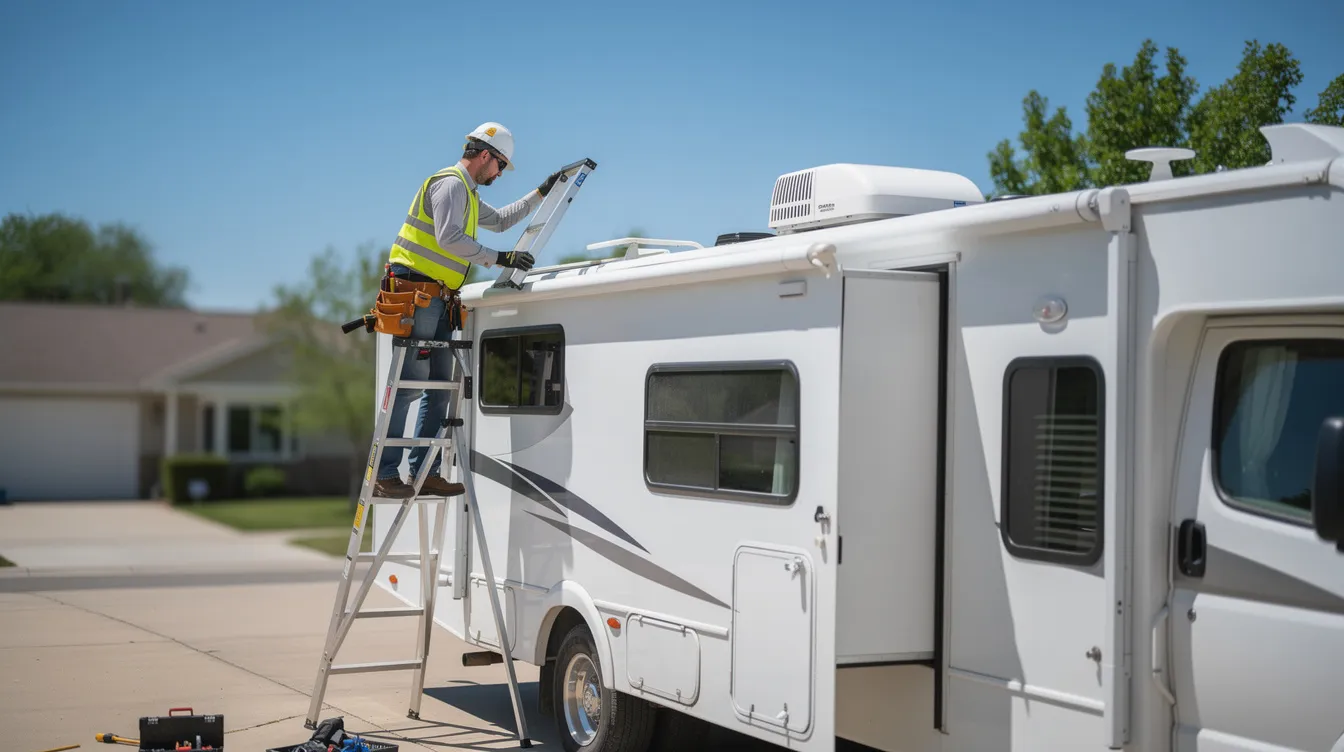
Mobile technicians are often faster to schedule than traditional shops. Emergency mobile rv repair is available in various locations, and mobile rv repair services can be found through online searches. Traditional repair shops are better suited for major engine or chassis work, frame damage, or collision repairs requiring lifts and specialty tools. |
Warranty and insurance considerations: Verify whether your extended warranty, insurance, or roadside assistance program covers mobile technicians or requires work at an authorized repair shop. Some warranties specify an authorized service center for certain repairs.
Choose mobile rv repair first when your rig is in a long-term site, when slide-outs won’t retract, when the leveling system fails mid-trip, or when you’re boondocking far from the nearest country town.
How to Choose a Reliable Mobile RV Repair Service
Not all mobile rv services are equal. Vetting a professional in advance – before a breakdown – saves serious stress during an urgent situation.
Credentials to verify:
Certifications from RVTAA or RVTI ensure technicians have formal training. RVTAA ensures all technicians meet rigorous certification standards.
RVIA Master Certified technicians demonstrate high standards in rv repair, and technicians maintain certifications through ongoing education requirements.
Mobile rv technicians are often manufacturer-trained for specific products from brands like Lippert, Dometic, Truma, or Victron.
Verifying a technician’s experience with specific rv types is crucial – whether you own a class a, travel trailers, or a fifth wheel.
Reviews and reputation: Check recent Google, Facebook, or campground forum reviews. Look for mentions of communication quality, punctuality, and whether techs successfully fixed leaks, electrical issues, or leveling systems on the first visit.
Service area and response time: Many mobile technicians publish a primary radius (50–100 miles) plus a per-mile surcharge beyond that. Some offer after-hours emergency calls.
Pricing transparency: Customers should request written estimates to avoid surprise costs. Ask about minimum service fees, hourly labor rates, diagnostic charges, parts sourcing, and trip charges. Reputable mobile technicians should have liability insurance for their work.
Communication and documentation: Quality mobile rv repair providers confirm appointments by phone, text, or email, provide written estimates, and leave detailed digital reports for your records and future warranties claims.
Keep a short list of trusted mobile technicians, roadside assistance numbers, and local repair shops saved in your phone before starting long trips.
Preventive Maintenance, RV Inspections, and Common Questions
Scheduled rv service and inspections by a mobile technician can dramatically reduce mid-trip breakdowns, costly water damage from leaks, and appliance failures that ruin a family vacation.
A typical annual mobile rv inspection includes:
Roof and seal integrity checks
Slide-out and leveling system function tests
Safety device checks (smoke, CO, propane detectors)
Brake light and signal verification
Visual inspection of tires, wheels, and suspension components
Seasonal maintenance you can schedule at your driveway or storage lot: winterization and de-winterization, generator oil changes, air conditioner cleaning, and fresh-water system sanitizing each spring.
Common questions RV owners ask mobile techs: How often should I reseal my roof? (Every 1–2 years depending on exposure and manufacturers’ recommendations.) Should I stay plugged in full-time? (Use a quality surge protector and monitor battery health.) When should I replace house batteries? (Every 3–5 years for lead-acid; longer for lithium – have a tech diagnose capacity annually.) How do I tell if my leveling system is out of calibration? (Uneven readings, error codes, or jacks that won’t fully extend are signs to expect a service call.)
A mobile rv repair service can create a custom maintenance schedule tailored to your usage – whether that’s occasional weekend camping, seasonal snowbirding, or full-time travel across multiple states. Keep basic spare parts on hand – fuses, water filters, spare hoses, a pressure regulator – so small issues can be stabilized until a mobile technician arrives.
Frequently Asked Questions About Mobile RV Repair
These FAQs cover practical concerns about timing, payment, and on-site logistics that weren’t fully addressed above.
Is mobile RV repair allowed at all campgrounds and RV parks?
Policies vary by park. Some campgrounds welcome mobile technicians without restrictions, while others require prior approval or limit work to certain hours. Always contact the campground office before scheduling rv repairs on site, Most long term rv park facilities are accommodating, especially for essential maintenance and diagnostics.
How should I prepare my RV for a mobile service visit?
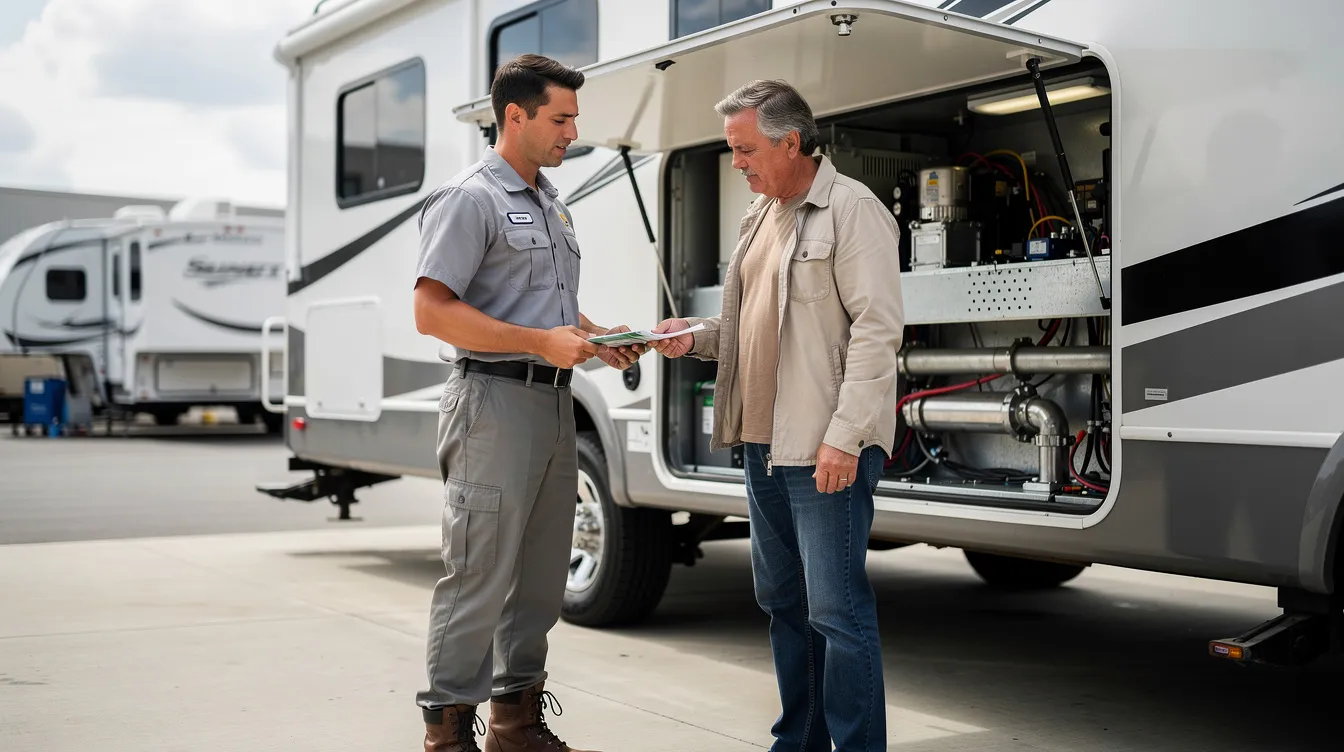
Clear access to key areas – the electrical bay, water hookups, furnace, water heater compartment, and interior appliances. Retract awnings if possible, create enough space around the rig for the tech’s truck and tools, secure pets, and have your rv documentation and recent service records ready. This helps the person diagnose and fix the problem faster.
Do mobile RV technicians cost more than a traditional repair shop?
Mobile rv repair often includes a separate trip or service fee, but owners avoid towing, fuel, and storage costs. Hourly labor runs $125–$185 for certified techs versus $80–$170 at a shop. Overall, the total money spent is frequently comparable – and the saving in time and hassle tips the scales for many owners.
Can a mobile RV technician help if parts have to be special ordered?
Yes. Many mobile technicians will diagnose the issue, place the parts order, and return to install once parts arrive – or ship them to you with clear instructions and a follow-up appointment. Parts availability can affect repair turnaround time for mobile technicians, but a good tech will provide a temporary workaround to cover you in the meantime.
How early should I schedule preventive RV inspections and maintenance?
Book pre-trip rv inspections and seasonal maintenance 2–4 weeks before major holidays or long summer trips. Mobile schedules fill quickly during peak travel months, and waiting until the last minute can leave you without expertise when you need it most.
Have a specific question about your rig, travel plans, or maintenance history? Contact a qualified mobile rv repair professional to discuss your needs and get a personalized service plan for 2026.