Nothing ruins a summer trip faster than stepping into a sweltering travel trailer with an air conditioner that won’t cooperate. Whether your unit is blowing warm air, barely pushing airflow, or refusing to turn on entirely, travel trailer ac repair is something every rv owner will face eventually. Here’s what you need to know to diagnose problems, control costs, and stay cool on the road.
Key Takeaways
Most rv ac units are 120-volt rooftop units that rely on a sealed system and an air moving system working together. Common issues with travel trailer air conditioning systems include poor cooling or electrical failures-problems that are usually fixable when caught early. Regular maintenance significantly reduces the chance of breakdowns and extends the lifespan of your rv air conditioner.
When your rv air conditioner is blowing warm air, producing unusual noises, or tripping breakers, the culprit is often a failed capacitor, dirty condenser coils, thermostat malfunction, or low campground voltage. Most rooftop rv air conditioners are sealed units that may require replacement rather than repair when major components like the compressor fail.
DIY troubleshooting should stay limited to power checks, air filters, and visual inspections. For anything involving electrical components, refrigerant, or roof access, a mobile repair service with certified technicians can come to your campsite and diagnose the entire hvac system in a single visit. Repair costs are driven by diagnostic time, hourly rate, and replacement parts-but routine maintenance is the cheapest way to avoid costly repairs.
How a Travel Trailer AC Works (and Why It Fails)
Every rv roof air conditioner has two core systems. The sealed system circulates refrigerant through the compressor, condenser, expansion device, and evaporator. The compressor compresses refrigerant back into a liquid, pushes it through condenser coils to dump heat outside, then lets it expand and absorb heat from interior air at the evaporator. Refrigerant vapor moves to the compressor and condenser in a continuous closed loop.
The air moving system uses two fans driven by electric motors-one blowing indoor air across the cold evaporator coils to deliver cool air into the trailer, and another pushing outside air over the hot condenser to reject heat. A thermostat, control board, capacitors, and 120V power supply coordinate when the compressor and fans run.
Failure causes are concrete and predictable: low campground voltage stresses motors and capacitors, dirty coils and clogged filters from summer dust reduce cooling, failed start/run capacitors prevent startup, worn fan motor bearings cause seizure, and UV-damaged shrouds let rain reach electrical components. Travel trailer air conditioners generally last between 8 to 15 years, but heavy use in Arizona, Texas, or Florida heat can cut that dramatically. Regular maintenance extends the lifespan of rv ac systems, and properly maintained ac units improve energy efficiency throughout their service life.
Common Signs Your Travel Trailer AC Needs Repair
Recognizing symptoms early can prevent complete ac failure mid-trip and help you avoid costly repairs or full unit replacement.
Blowing warm air: The unit cools briefly then blows warm air, never reaches the set temperature, or only cools at night. Warm air from vents indicates potential refrigerant issues, but dirty condenser coils, low voltage, or a weak compressor are more common causes. Typical air conditioning problems include dirty filters, frozen coils, and faulty capacitors.
Weak airflow: Barely any air from ceiling vents, inconsistent vent output, or airflow that drops after 15–20 minutes. Clogged filters can restrict airflow and reduce efficiency. Dirty filters can cause reduced cooling performance and frozen evaporator coils.
Electrical warnings: AC tripping the 20A or 30A rv breaker, lights dimming when the compressor starts, or GFCI outlets tripping during cycles. Low campground voltage can trip breakers in rv air conditioning systems. Frequent cycling on and off suggests a failing thermostat.
Strange noises and smells: Rattling, grinding, or buzzing from the roof unit may indicate loose components or compressor failure. Moldy smells often signal moisture buildup in the ac system. A burnt-plastic odor demands immediate shutoff.
Water leaks: Condensation dripping from the ceiling or water stains near the roof opening. Water leaks in rv air conditioning systems often result from blocked drain paths or poor gasket sealing.
DIY Travel Trailer AC Troubleshooting: What You Can Safely Check
Before touching anything, disconnect shore power, turn off the generator, and verify breakers are off. RV owners should stick to inspection and cleaning-leave sealed system and wiring repairs to professionals. Many travel trailer ac issues can be diagnosed and repaired using basic tools, but safety comes first.
Power checks: Confirm the campground pedestal delivers proper voltage. Advanced troubleshooting may require testing with a multimeter for electrical components. Inspect the rv’s main breaker panel and verify the ac breaker isn’t tripped or showing heat damage.
Thermostat: Verify mode is set to “Cool,” fan set properly, and the set point is below current indoor temperature. Replace batteries on wall thermostats older than five years. Airflow restrictions and thermostat malfunctions are common causes of ac issues in travel trailers.
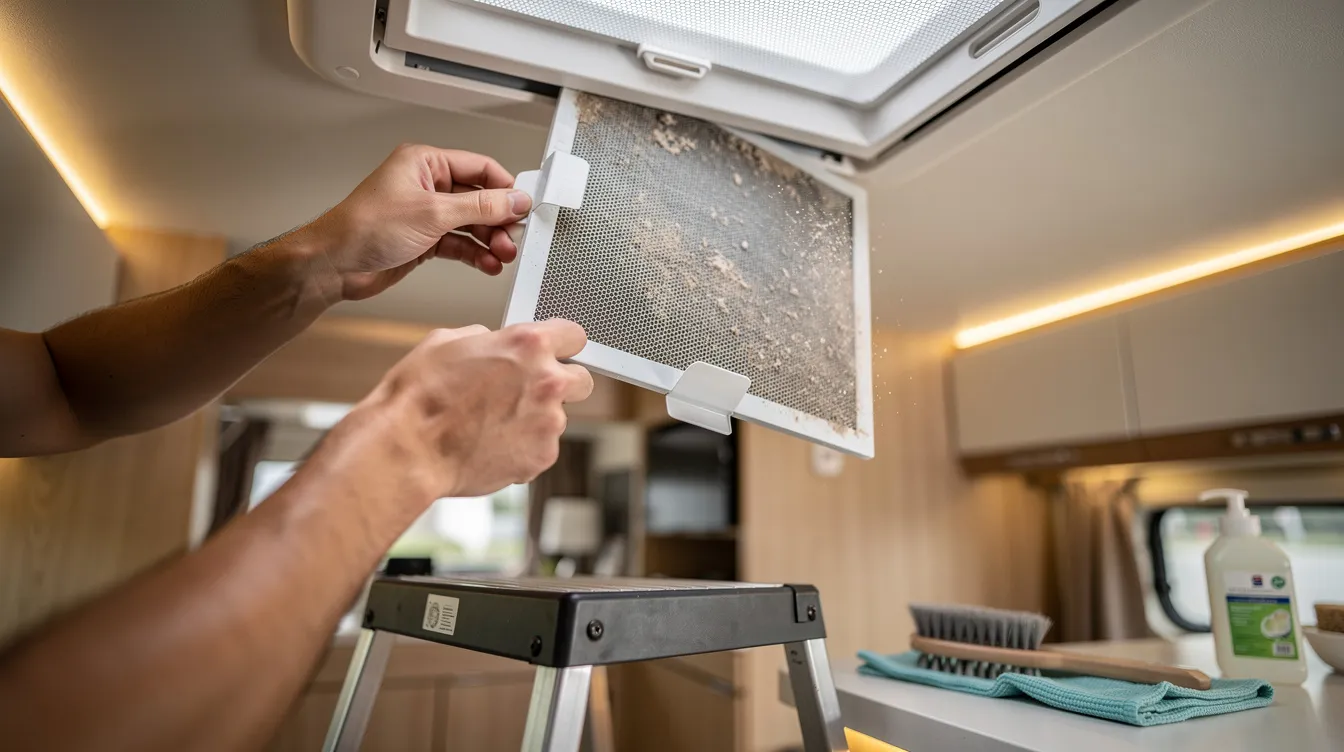
Filters: Cleaning ac filters should be done every few months. Remove the interior return-air grille and clean or replace the filter-this alone can restore 20–30% of lost airflow. Proper inspection of the ac unit should include checking for blocked airflow and electrical components.
Coil inspection: From inside, check evaporator coils for dirt buildup. On the roof, look for leaves, cottonwood fluff, or road debris packed into the condenser.
Do not attempt to tap into the sealed refrigerant system, bypass safety switches, or run the ac on undersized extension cords. Failing capacitors are a frequent cause of air conditioning failures-but replacing them involves high voltage and should be left to pros.
When to Call a Professional RV Air Conditioner Repair Service
Certain travel trailer ac problems demand certified rv air conditioning repair-especially when high voltage, refrigerant handling, or structural roof issues are involved. Regular inspections can identify issues before they escalate into major failures.
Call a pro when:
The compressor won’t start at all
Breakers trip repeatedly after basic checks
Fan motors are seized or making loud mechanical noise
The control board shows errors or you see burnt wiring
You suspect refrigerant leaks in the sealed system
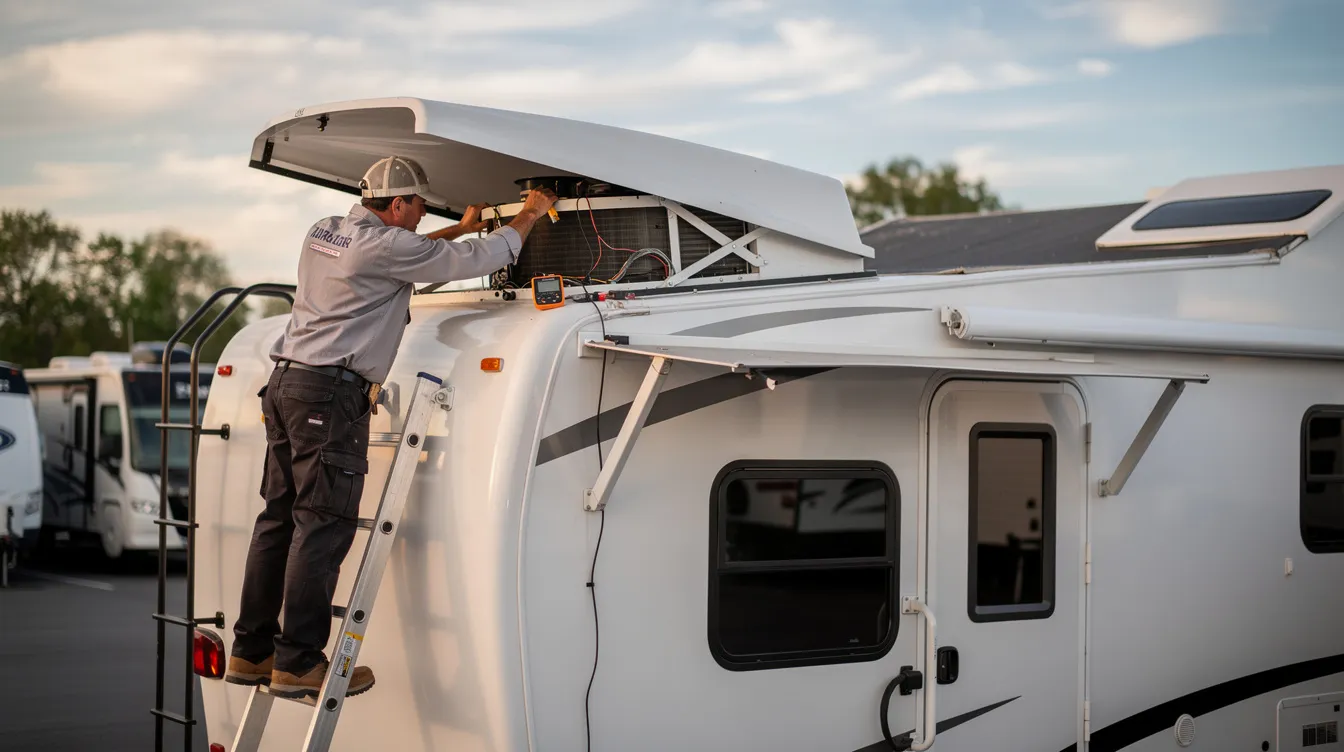
A mobile rv ac repair service like RV Repair Hero’s on-site RV repair in Tucson, AZ sends technicians to your campsite, driveway, or storage facility, eliminating towing and allowing same-day work during peak summer heat. Professional rv ac repairs can often be completed within a day. A typical diagnostic visit includes verifying voltage and amperage draw, checking capacitors and contactors, inspecting ducting and roof seals, and testing thermostat calibration. Technicians check refrigerant levels during rv ac repair appointments.
Licensed techs handle refrigerants under EPA regulations, identify internal leaks, and determine whether your rooftop rv air conditioner is repairable or needs replacement. Many rv repair services, including mobile RV repair technicians serving Tucson, AZ, work with Dometic Brisk Air, Coleman-Mach, Furrion Chill, and GE rooftop units, matching replacements to existing roof openings on travel trailers and fifth wheels.
What Travel Trailer AC Repair Typically Costs
RV ac repair pricing combines a service call fee, diagnostic labor at an hourly rate, and parts or full unit replacement. Repair costs vary based on the complexity of the issue.
Service call: A service fee of $125 is required for all rv repairs, with mobile rv ac repair potentially incurring additional travel fees beyond a set radius.
Labor: Hourly labor rates start at $175 for the first hour, with additional time billed in quarter-hour increments. Many shops quote $120–$180/hr depending on region.
Common parts: Capacitor replacement runs $150–$280 all-in. Fan motors cost $380–$680 installed. Control boards land between $350–$600. Replacing a compressor can significantly increase repair costs.
Full replacement: When a new unit is needed-compressor failure, coil leaks in the sealed system, or the unit is past 10–12 years-installing a 13,500 or 15,000 BTU rooftop unit typically runs $800–$1,500+.
Annual service: Annual rv air conditioner service costs around $300 and covers coil cleaning, electrical checks, and performance checks.
Routine maintenance can prevent costly emergency repairs. Get a written estimate, ask about repair options (repair vs. replace), and clarify what’s included before approving work. Basic troubleshooting for rv air conditioning includes checking power supply and filter condition before calling for professional service.
Preventative Maintenance to Avoid Costly Repairs
Simple yearly maintenance can dramatically reduce the chance of mid-trip ac failure and extend your rv’s air conditioning system life by several seasons. Routine maintenance can prevent costly rv ac repairs-and it costs far less than any emergency fix.
Seasonal schedule:
Spring: Inspect filters, coils, shroud, and roof seal before your first trip
Mid-summer: Clean filters and check performance after heavy use through June–August
Fall/winter: Inspect seals, remove debris, and prepare for storage
Owner tasks:
Clean or replace interior air filters every 30–60 days during heavy use
Vacuum return-air grilles and keep vents unobstructed by cargo or furniture
On the roof, remove leaves, dirt, and debris from the condenser coils at least annually
Reduce system stress:
Close blinds on the sunny side and use reflective window covers in hot weather
Run the awning for shade and pre-cool the trailer in the morning before temperatures spike
Avoid setting the thermostat extremely low-moderate settings reduce compressor strain
For full-timers or Sunbelt travelers, schedule a professional annual service with a mobile RV repair service in Marana, AZ that includes coil deep-cleaning, electrical tightening, and thermostat calibration. An experienced mechanic can diagnose developing problems and fix them in the long run before they become expensive.
Travel Trailer AC Repair FAQs
These FAQs cover practical questions rv owners frequently ask about rv ac repair, maintenance, and upgrade decisions.
Can I run my travel trailer AC while driving?
Rooftop rv ac units need 120V power, so they only operate while driving if powered by a generator or robust inverter system. Most towable owners rely on the truck’s dashboard ac for cooling in transit and switch to the trailer’s air conditioner once parked on shore power. Continuous operation over rough roads can stress older fan motors and shrouds, so have the unit serviced before long summer highway trips.
How long should my travel trailer AC run before I notice cool air?
A healthy rv air conditioner should deliver noticeably cooler air within 5–10 minutes and begin dropping interior temperature within 20–30 minutes. On extremely hot days (95–105°F), even a properly sized 13,500–15,000 BTU unit may only maintain a 15–20°F difference from outside. If the unit runs an hour with no improvement, check filters, power supply, and consider calling for professional rv air conditioning repair.
Is it worth upgrading to a second AC on my travel trailer?
Many 30–36 foot travel trailers built after 2019 are pre-wired for a second rooftop unit, which can dramatically improve rv comfort in bedrooms or rear living areas. Key considerations include available electrical capacity (30A vs. 50A service), panel space for an additional breaker, and cost versus improving insulation or window shading. Consult an rv ac repair service before upgrading to confirm compatibility with the existing hvac system.
Can low campground voltage damage my RV AC?
Persistent low voltage below about 108–110V under load can overheat compressors and fan motors, leading to premature failure and expensive repairs. Use a quality rv surge protector or EMS (Electrical Management System) that monitors voltage and shuts power off when it drops dangerously low. If lights dim and the ac hums without starting, shut it off immediately and have the power supply inspected before further use.
How often should I replace my travel trailer’s AC unit?
Many rooftop rv ac units last 8–12 years with proper maintenance, but constant sun, salt air, and high mileage shorten that schedule. Consider replacement when the unit exceeds a decade and needs major components-compressor, coils, or repeated capacitor and motor replacements-or when it can’t maintain comfort after professional service. Newer high-efficiency models cool better while drawing fewer amps, which helps on 30A hookups. Don’t wait for a total breakdown-schedule an appointment today for performance checks that keep your system running strong.